*New* West Coast Poverty Center’s (WCPC) Economic Security Roundtable: Daniel Schneider on New Evidence on Labor Standards Compliance and the Complaints They Generate (05/21/26)
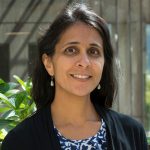
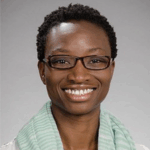
Join the West Coast Poverty Center’s (WCPC) next Economic Security Roundtable meeting, on May 21, from 9:30-11 AM. Dr. Daniel Schneider (Harvard University, Shift Project) will give a presentation titled, “Who Raises Their Voice? New Evidence on Labor Standards Compliance and the Complaints They Generate.” Based on surveys of workers in the food services and retail industries, this research provides data on the incidence of various labor standards violations and the number of complaints filed. The researchers explore what factors might help explain the observed gap between the experience of a violation and making a complaint, including the role of union membership. Dr. Schneider and local respondents will discuss these findings and their potential implications for labor standards enforcement. Register here. (read more)
|
 |
CSDE Announces Charles and Josephine Hirschman Award for Student Research (05/22/26)
|
CSDE is thrilled to announce the Charles and Josephine Hirschman Award for student research. CSDE students may apply for up to $2,000 in funds to directly support a research project. Funds may support activities such as the cost of conducting fieldwork, data purchases, the hiring of a translator or transcriber, or participant rewards in surveys. Be creative! All funds must be spent during the 2026-27 academic year and may not be used to pay tuition or your own salary. Applications are due Friday, May 22, 2026. Apply here. A faculty advisor must approve of your application via this form. Click read more to see details on eligibility and review criteria .
(read more)
|
 |
*New* Unrealized Promises: A Conversation with Lauren Olsen on Medical Education and Social Inequality (05/22/26)
|
Join UW Medicine, Department of Bioethics and Humanities on May 22 from 9-10:30 AM in the Seattle Health Sciences Education Building (Room 421) on or Zoom for a conversation with Lauren D. Olsen, PhD, MA on medical education and social inequality. Olsen’s scholarship examines how medical school curricula and training structures can perpetuate inequities in care. Drawing from her new book, “Curricular Injustice: How U.S. Medical Schools Reproduce Inequalities“ (Columbia University Press, 2024), she will share insights into reforms that shape the future of physician training and healthcare outcomes. Drawing from her new book, “Curricular Injustice: How U.S. Medical Schools Reproduce Inequalities“ (Columbia University Press, 2024), she will share insights into reforms that shape the future of physician training and healthcare outcomes. Register here to join by Zoom.
(read more)
|
 |
Call for Applications: Max Planck Institute for Demographic Research (MPIDR)- IMPRS-PHDS (Due to CSDE 05/26/26)
|
CSDE collaborates with the Max Planck Institute for Demographic Research (MPIDR) in a doctoral training program called the International Max Planck Research School for Population, Health and Data Science (IMPRS-PHDS). This program is based in Rostock, Germany, but includes 12 doctoral programs in the U.S. and Europe. CSDE has one IMPRS-PHDS fellowship application slot available to current CSDE Trainees. The fellowship funding will support a one quarter research stay at the MPIDR any time between July 1, 2026 and June 30, 2027. Information about the program, the faculty, and partner institutions can be found here. Applications are due to CSDE by Tuesday, May 26. Apply here.
(read more)
|
 |
*New* 2026-2027 Washington State Labor Research Grants (05/26/26)
The Harry Bridges Center for Labor is requesting proposals for the 2026-2027 Washington State Labor Research Grants. This grant supports policy-focused research that addresses labor issues relevant to Washington State. Research does not need to be limited to Washington State, but it must have policy implications at the state or local level. The application funding for the 2026-2027 academic year is Tuesday, May 26th, for all three campuses. Priority is given to proposals by University of Washington faculty, both full-time and lecturers. University of Washington graduate students may also apply. Graduate students must also obtain a letter of support from a faculty member. This letter should be submitted directly by the faculty member. (read more)
|
|
Collaborate with CACHE to Host Your Code and Data
Have you recently finished a project or published a paper that integrates social and health science data with disaster, climate or environmental data? Would you like to share your code on CACHE? Code can be in any language and will be reviewed and run by peers (CACHE post-docs and staff) before making it public. CACHE welcomes code that uses single data sets of interests (e.g., social or health data that ask about disasters or environmental, climate or disaster data) or integrates between these two types of data. Submit a short application here. (read more)
|
 |
Call for Papers: International Conference on Social Computing 2026 (05/25/26)
The International Conference on Social Computing (ICSC 2026) welcomes submissions and participation for its in-person conference at Nuffield College, University of Oxford on September 2-4, 2026. Paper submissions are due May 25, 2026. ICSC is a long-running research conference that connects computational methods with social science to better understand human behaviour, social networks, and societal change.
(read more)
Call for Abstracts: 2026 International Conference on Aging in the Americas (05/31/26)
The Call for Abstracts is now open for the 2026 International Conference on Aging in the Americas (ICAA). The conference will be held on September 24–25, 2026, in Chicago, Illinois, and will center on the theme Aging and Health in the Americas. We invite abstract submissions from emerging and early-career scholars in the social sciences, particularly those whose work focuses on Latino health and aging. Abstracts are due by May 31, 2026. Submit your abstract here: https://forms.gle/oLd2RovyFZkts42G6. (read more)
|
 |
Call for Proposals: Office Of Naval Research (ONR) STEM Education and Workforce Program (06/30/26)
The Office Of Naval Research (ONR) seeks proposal under the ONR Science, Technology, Engineering, and Mathematics (STEM) Education and Workforce Program, due June 30, 2026 at 2 PM PT. STEM education programs and activities are defined as formal or informal education primarily focused on physical and natural sciences, technology, engineering, social sciences, and mathematics (including environmental science education or stewardship).
(read more)
Call for Papers: Journal of Population Research Special Issue on Place-based Demography for Regional Planning (06/30/26)
The Journal of Population Research invites invites contributions from population scholars—including demographers, population geographers and regional scientists—interested in the use of demography as a tool to inform territorial policies and regional planning. This special issue, “Place-based Demography for Regional Planning,” will be edited by CSDE External Affiliate Amy Spring (Georgia State) and Federico Benassi. Contributions may address a wide range of topics, including but not limited to depopulation, population ageing, mobility and residential segregation, and population projections. Submissions may refer to different empirical contexts and territorial scales, and may adopt methodological, applied or theoretical perspectives. A key requirement is a strong territorial perspective, whereby spatial units are not treated merely as classificatory variables but as active dimensions of demographic analysis. Contributions engaging with theoretical debates—particularly those reflecting on the role of demography in territorial governance and spatial planning processes—are especially welcome. More information here.
(read more)
Call for Abstracts: Special Issue of Studies in Family Planning on Rethinking Contraceptive Futures (06/30/26)
|
Studies in Family Planning is calling for abstract submissions for a special issue on “Rethinking Contraceptive Futures,” by June 30, 2026. This call for abstracts invites contributions that broaden and challenge traditional understandings of contraceptive use, access, and meaning. Contributions may engage explicitly with family planning debates but should foreground contraceptive practices and their evolving meanings within broader social and demographic paradigms. We seek papers that illuminate contraceptive practices as culturally,
(read more)
|
 |
*New* SSRC LEGO Foundation Fellowship for Early Career Researchers (07/31/26)
|
The Social Science Research Council is pleased to announce the LEGO Foundation Fellowship, a new global research fellowship developed in partnership with the LEGO Foundation. Learn more here. Applications open June 1 and will be due July 31. The fellowship will provide flexible support of up to $300,000 over three years for early- and mid-career researchers whose work can strengthen understanding of how children thrive across diverse contexts. Research themes of interest include: the youngest children in crisis and conflict settings; inclusion and wellbeing for neurodivergent children; and children's thriving in an AI-enabled world.
(read more)
|
 |
Register Now for 2026 Northwestern Main and Advanced Causal Inference Workshops (Starting 08/03/26)
|
The Northwestern Main and Advanced Causal Inference Workshop will hold its 15th annual meeting on Research Design for Causal Inference at Northwestern Law School in Chicago, IL. The main workshop takes place Monday – Friday, August 3-7, and the advanced workshop follows, Monday – Wednesday, August 10-12, with an optional machine learning primer on Sunday afternoon, August 9.
In person-registration is limited to 125 participants for each workshop, so hurry up and register for in person attendance! There will also be a Zoom option, but attending in person is encouraged. Get more information and register now.
(read more)
|
 |
Call for Papers: Aftermath of a Pandemic – Changes in Mortality and Health (09/11/26)
|
IUSSP and its co-organizes invite papers for a workshop focused on “Aftermath of a Pandemic: Changes in Mortality and Health.” Post-pandemic periods can reveal or amplify existing health inequalities, and the effects of pandemics often extend beyond the acute phase of infection, influencing long-term patterns of mortality and overall population health. This workshop will focus on these poorly understood effects.
The workshop will be hosted by the Oslo Metropolitan University on January 28-29, 2027. Submit a 300-word abstract and include a title, author(s), affiliation(s) via this form by September 11, 2026. Abstracts should be written in English. Attendance to the workshop is limited to 25 participants. Following the workshop, the organizers plan to pursue a special issue of a scientific journal.
(read more)
|
 |
Call for Papers: Special Issue of Studies in Family Planning on Pandemic and Epidemic Impacts on Reproduction, Sexual and Reproductive Health, and Family Dynamics (09/15/26)
Call for Nominations: 2027 IUSSP Early Career Awards (11/01/26)
|
The IUSSP Early Career Awards aim to honour outstanding contributions to the broad field of population studies by early career scholars in different world regions and boost the global visibility of their achievements. Nominate colleagues by November 1, 2026. Nominees must have received their PhD within the last seven years and be IUSSP members. For more information about the Award and the nomination procedure and to fill out the application form, please go to IUSSP Early Career Awards.
(read more)
|
|
NIH Highlighted Topic on Health and Extreme Weather (HEW)
NIH is pleased to announce a Highlighted Topic on Health and Extreme Weather (HEW) effective this month. As you may know, the Highlighted Topics generally do not carry any set aside funding or special considerations for review, but they do express NIH’s interest in a particular scientific field. This Highlighted Topic, while not explicitly carrying funding, is tied to the Health and Extreme Weather initiative funded out of NIEHS. The work of demographers and population health scientists often fits within the scope of this Topic. (read more)
|
 |
State Policy & Politics Database (SPPD) Releases Newly Developed State Policy Index
New MDPI Journal Populations: Read Recent Articles and Consider Submitting
IPUMS Data Updates: DHS, IHGIS, and CPS
|
IPUMS released multiple data updates, including DHS data, IHGIS data, and CPS data.
IPUMS DHS has released standard variables from 112 new samples, including 34 new countries. The release includes data from the women, household members, births, and children units of analysis. Users can also now request IPUMS DHS data extracts programmatically using the IPUMS API and through our client libraries for R (ipumsr) and Python (ipumspy).
IHGIS has released tables and boundary files for population and housing censuses from Benin 2013, Niger 2012, and Sierra Leone 2015. We have also added a shapefile for Kenya 2019 locations (n = 3,838) to accompany previously released data. In addition, new linking variables in the IPUMS DHS release allow users to easily attach IHGIS data to DHS records.
IPUMS CPS has added the March 2026 monthly data. We have also updated the January 2026 monthly data to reflect a revised version of the file released by the Census Bureau that incorporates the 2026 population estimates. See the IPUMS CPS revision history for details.
(read more)
|
 |
|