Santana and Co-authors Review Mental Health Risks and Recommendations for Wildfire Researchers
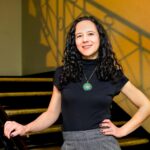
CSDE Affiliate Francisca Santana (Environmental and Forest Sciences) and co-authors highlighted the mental health risks facing wildfire researchers in a recent forum piece in Fire Ecology. Mental health risks include direct and secondary trauma compounded by climate anxiety and ecological grief. Drawing on their own experiences conducting interdisciplinary, community-engaged research in western North America, Santana and co-authors synthesize actionable recommendations for individual researchers, supervisors, and institutions to support researcher wellbeing. The piece calls on the wildfire research community to cultivate communities of care to sustain both researcher mental health and the quality of wildfire science.
(read more)
|
 |
Burt Investigates Heterogeneity in Violent Victimization Within the LGBT Population
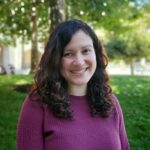
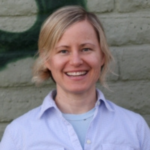
Motivated by intersectionality theory and building on existing research, CSDE External Affiliate Callie Burt (Georgia State University) and Caitlin Dorsch used data from the National Crime Victimization Survey to examine heterogeneity in violent victimization rates among LGBT subgroups compared to non-LGBT counterparts. Rates of violent victimization are highest for bisexual individuals, followed by transgender, lesbian/gay, and non-LGBT individuals. Sociodemographic differences explain between 15% and 41% of disparities depending on subgroup, leaving the bulk unexplained. Burt and Dorsch also make a methodological contribution by identifying current limitations in how sex, sexual orientation, and gender identity are measured in large population surveys and suggest revisions for more precise and inclusive measurement. (read more)
|
 |
Ma and Colleagues Examines Financial Concerns and Psychological Distress Among Asian Americans During COVID-19
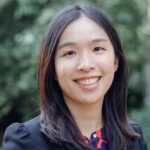
In a recent article published in Frontiers in Public Health, CSDE Affiliate Kris Pui Kwan Ma (Family Medicine) and her colleagues examined how financial concerns affected psychological distress among Asian American adults, and whether benefit finding (a cognitive appraisal and behavioral adaptation process) and received pay (i.e., work for pay/profits or receive financial assistance) moderated this relationship. Using survey data from the 2021 Asian American and Native Hawaiian/Pacific Islander COVID-19 Needs Assessment Project, the authors found that financial concerns were associated with greater psychological distress. While higher levels of benefit finding were independently linked to lower distress, benefit finding alone did not buffer the effect of financial concerns. Instead , Asian Americans who reported higher benefit finding and received pay were most protected from psychological distress when facing financial hardships, pointing to the combined importance of adaptive coping and economic support, when considering the significant and disproportionate financial insecurity that exacerbated and persisted in Asian Americans with limited English proficiency during the COVID-19 pandemic. (read more)
|
 |
Cha Explores Link Between Educational Quality and Cognitive Impairment in Mid-to-Later Life
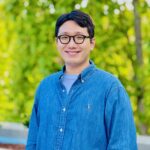
CSDE Affiliate Hyungmin Cha (Sociology) recently published research on how childhood state education quality shapes the risk of cognitive impairment in mid-to-later life in Alzheimer’s & Dementia: Behavior & Socioeconomics of Aging. Cha and co-authors linked data from the 2000–2020 Health and Retirement Study to historical records on state public education systems. Greater state-level educational resources, indicative of educational quality, were associated with a decreased risk of cognitive impairment, with or without dementia, among both White and Black adults aged 55 and older. Associations did not differ by race. (read more)
|
 |
Korinek Explores How Living Arrangements and Family Resources Shape Cognitive Function Among Older Adults in Vietnam
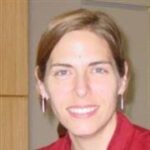
In a new article in Social Science & Medicine, CSDE External Affiliate Kim Korinek (University of Utah) used data from the Vietnam Health and Aging Study and adopted a family resource model to examine the relationship between living arrangements and cognitive functioning among older adults and to ascertain the mediating role of material and psychosocial pathways. Older adults living alone show the poorest cognitive functioning relative to those living with both a spouse and children, with the association mediated by household assets, social engagement, psychological distress, and loneliness. Those living only with a spouse have fewer assets and lower social engagement, while those living with children show lower social engagement but not greater loneliness or distress. The findings highlight living arrangement-based interventions as a potential strategy for protecting cognitive health among Vietnam's rapidly aging population. (read more)
|
 |
|
|
CSDE Workshop: Agent Based Modeling in R (04/15/26)
|
On Wednesday April 15, from 10 – 11:30 AM, CSDE will host a workshop that provides a basic introduction to Agent-Based Modeling (ABM). The workshop will be divided into three sections. During the first third of the course we will review and discuss the basic elements of ABMs and their applications in a variety of fields including demography, sociology, anthropology, political science and public health. In the second section of the course we will work through one or two seminal examples of ABMs and reproduce the models in base R. Due to the limited time available, the R code to build these models will be provided to participants in advance. Finally, we will walk through an example of a complex ABM using the statnet and EpiModel R packages. Students will not need these packages to complete the workshop.
By the end of the workshop participants will be able to describe the unique features of ABM that make them distinct from other modeling approaches, write R functions to produce a simple ABM, and be familiar with additional R packages that provide functionality for ABMs
(read more)
|
 |
CSDE Computational Demography Working Group (CDWG): Andrew Messamore (04/15/26)
|
On April 15 from 10 - 11 AM, the UW Computational Demography Working Group will host CSDE Affiliate Dr. Andrew Messamore (Sociology). Dr. Messamore will deliver a talk titled “The Emergence of Ownership Opacity in Landed Capitalism: Consolidation, Adaptation, Evasion. The CDWG meeting will be held in person at Raitt 223.
(read more)
|
 |
*New* CSDE Workshop on Introduction to the Northwest Federal Statistical Research Data Center (NWFSRDC): Enabling Access to Confidential Microdata from U.S. Federal Government Agencies (04/22/26)
CSDE Workshop: PAA 2026 Data Viz Office Hours (4/15/26, 4/22/26, and 4/29/26)
|
CSDE is hosting three sets of office hours to help you prepare data visualizations for PAA! Join CSDE Training Core PI Audrey Dorélien, 2026-2027 CSDE Seminar Chair Min Cha, and CSDE Training Director Jessica Godwin to get feedback and consultation on figures for your PAA oral presentations or posters. Both faculty and students are welcome!! Please sign up for a consultation slot here on 4/15/26, 4/22/26, or 4/29/26 between 12 and 1 PM.
(read more)
|
 |
Data Science and Demography Training (DSDT): Applications due 04/24/26
|
CSDE is pleased to announce the availability of three 12-month fellowships supported by the NIH Training in Advanced Data Analytics (TADA) T32 fellowship program. These Data Science and Demography Training (DSDT) fellowships begin mid-September 2026. The fellowship program is available to U.S. Citizens or Permanent Residents. The goal of the training grant is to provide rigorous training in advanced data science methodologies for the next generation of behavioral, social science and population health researchers or to provide advanced demographic training for data scientists. More information is available here. Applications are due Friday, April 24, 2026, by 5:00 PM PT.
(read more)
|
|
Apply Now to CSDE’s NIH Grant Writing Summer Program (05/15/26)
|
The CSDE Development Core is once again hosting its annual Grant Writing Summer Program (GWSP) to assist scholars (UW postdocs, researchers, and professors affiliated or planning to affiliate with CSDE, as well as other researchers in the Seattle area) in preparing applications to the National Institutes of Health (NIH). Applications are now open and due May 15! More info here, and application page here. Note that the program is in person and meets once every two weeks, late June – mid Sep, on the UW Seattle campus. Final schedule is set based on the schedules of the selected participants.
Make sure to read all the FAQ's. Past participants report great success, and lots of support and even fun along the way. Applications are due May 15. Additional questions? Contact goodreau@uw.edu.
(read more)
|
|
Call for Applications: Max Planck Institute for Demographic Research (MPIDR)- IMPRS-PHDS (Due to CSDE 05/26/26)
|
CSDE collaborates with the Max Planck Institute for Demographic Research (MPIDR) in a doctoral training program called the International Max Planck Research School for Population, Health and Data Science (IMPRS-PHDS). This program is based in Rostock, Germany, but includes 12 doctoral programs in the U.S. and Europe. CSDE has one IMPRS-PHDS fellowship application slot available to current CSDE Trainees. The fellowship funding will support a one quarter research stay at the MPIDR any time between July 1, and June 30, 2027. Information about the program, the faculty, and partner institutions can be found here. Applications are due to CSDE by Tuesday, May 26. Apply here.
(read more)
|
 |
*New* Submit Questions for Fireside Chat with the NIH Director at the PAA 2026 Annual Meeting (04/20/26)
|
The Population Association of America invites members of the PAA community to submit questions by April 20 for an upcoming fireside chat with the NIH Director at the PAA 2026 Annual Meeting. Professor Will Dow (UC-Berkeley) will moderate a fireside chat with Dr. Jay Bhattacharya on “NIH and the Future of Population Research: A Conversation with the NIH Director” at PAA 2026 on Friday, May 8, 2026, 1:30 – 2:45 PM in the Ferrara Theater (1st Floor) of the America’s Center.
(read more)
|
 |
*New* WAC-Seattle Event: Jennifer Sciubba on “The Power of Population: How Demographic Shifts are Shaping Our Global Future” (04/30/26)
|
Join World Affairs Council-Seattle on Thursday, April 30 from 5:30 – 7 PM, for an in-person discussion with Jennifer Sciubba, President and CEO of the Population Reference Bureau, on “The Power of Population: How Demographic Shifts are Shaping Our Global Future.” From rapidly aging populations in some regions to growing youth populations in others, demographic shifts are quietly but powerfully transforming economies, security, and global influence. Drawing on her work at PRB, Sciubba will unpack the trends driving these changes—and what they mean for the future of nations, communities, and everyday life. CSDE External Affiliate Jamaica Corker (Bill and Melinda Gates Foundation) will moderate, and a complimentary wine reception kicks off the event from 5:30 - 6 PM. Individuals associated with CSDE are eligible for WAC Member Pricing, using the code CSDE2026. Register here.
(read more)
|
 |
CSSCR Spring 2026 Workshops
|
The Center for Social Science Computation and Research (CSSCR) released its spring workshop schedule. The bulk of sessions focus on data analysis and analytical methods using Codex, Atlas.ti, Python, R, and Stata. This quarter, CSSCR will also have workshops on how create an academic research poster using PowerPoint.
(read more)
|
 |
CSSS Seminar: Charles C. Lanfear on “Reciprocal Relationships, Reverse Causality, and Temporal Ordering: Testing Theories with Cross-lagged Panel Models” (04/15/26)
|
On Wednesday, April 15, CSSS will host Dr. Charles Lanfear (Cambridge University) who will deliver a seminar titled, “Reciprocal Relationships, Reverse Causality, and Temporal Ordering: Testing Theories with Cross-lagged Panel Model.” Sign-ups for meeting with Dr. Lanfear are available here. CSSS is also sponsoring a lunch for students. Those interested can add their name/email to the this google sheet.
(read more)
|
 |
Applications Open for Panel Study of Income Dynamics (PSID) Data User Workshop (04/15/26)
The Panel Study of Income Dynamics (PSID), begun in 1968, is the world’s longest-running multigenerational household panel study. It is used to investigate scientific and policy questions about life course trajectories in health and well-being, intergenerational social and economic mobility, income and wealth inequality, family investments in children, neighborhood effects on opportunity and achievement, and many other topics. This five-day, in-person only workshop–held from June 15 – 19, 2026 at the University of Michigan will orient participants to the content and structure of the core PSID interview, its special topics modules, and its supplemental studies, including the Child Development Supplement (CDS) and the Transition into Adulthood Supplement (TAS). The workshop is designed for graduate students, postdoctoral fellows, junior faculty, and research professionals. Applications are due by April 15. (read more)
|
 |
APDU Webinar on Demystifying Data Privacy in the U.S. (04/15/26)
|
Join the Association of Public Data Users (APDU) on April 15 from 11- 12 PM PT for a webinar on “Demystifying Data Privacy in the US.“ APDU has created a set of resources to help policymakers, researchers, advocates, and the public better understand the mechanics of the Privacy Act of 1974 and how the federal government manages and discloses personal information. These materials can help you effectively assert your rights, close harmful loopholes, and hold the government accountable to treating everyone fairly. Join experts Maya Bernstein and Bethanne Barnes in a conversation with Amy O’Hara to mark the launch of these new resources.
(read more)
|
 |
UW Data Science & AI Accelerator Accepting Summer 2026 Proposals (04/26/26)
|
The Data Science and AI Accelerator pairs eScience Institute data scientists with researchers from any field of study to work on focused, collaborative projects. Collaborations may center on analysis of an existing dataset to answer a specific research question, an implementation of software for processing or analyzing data, data visualization tools, or tools for data interpretation. This program is centered around building capacity — helping researchers to learn the skills and tools they need to do their projects rather than providing people to write code for them. Projects for Summer 2026 must be received by April 26 at 11:59 PM PT.
(read more)
|
 |
Bill & Melinda Gates Foundation: Multiple Global Grand Challenges Grant Opportunities (04/28/26)
|
The Bill & Melinda Gates Foundation invites applications for the following Grand Challenges grant opportunities. Applications for all RFPs are due no later than April 28, 2026, at 11:30 AM PDT.
(read more)
|
 |
From Malthus to Musk: Searching for Population Equilibrium in East Asia (04/30/26)
|
Please join the East Asia Center for a special public panel, “From Malthus to Musk: Searching for Population Equilibrium in East Asia“, that will feature CSDE Director Sara Curran and three other scholars on April 30 from 3:30 – 5 PM, in HUB 337, University of Washington.
From Malthus’s warnings of overpopulation to Musk’s urge to boost fertility, the drastic turn of humanity’s relationship with population growth is one of the defining features of East Asian societies. Nowhere have demographic shifts been more seismic in their speed, scale, and scope than in East Asia over the past century. Populations in this region now simultaneously exhibit the world's longest life expectancies and its lowest fertility rates.
How did East Asian societies arrive at this point? Can they return to replacement-level fertility? Echoing the historical contrast between East Asian and Western European demographic regimes, we debate the existence of a distinct "East Asian model" of demographic transition. Adopting a regional and comparative perspective, we argue that intense family competition and proactive government intervention—both operating within the context of deep-seated cultural traditions—have defined the region's current demographic challenges.
(read more)
|
 |
Call for Papers: Northwest Preparedness and Resilience Conference (04/30/26)
The Northwest Preparedness and Resilience Conference brings together an interdisciplinary group of regional practitioners, researchers and other partners working across a range of disaster-related fields. This year’s conference will take place on the University of Washington campus in Seattle on September 16-17, 2026. Abstract submissions are now open for those interested in presenting at this year’s conference! We invite researchers and practitioners from all disaster science and preparedness-related disciplines to submit abstracts focused on topics related to preparedness and resilience. (read more)
|
|
*New* Call for UW Student Research Proposals: Parvin E’tesami Student Support Fund (05/05/26)
|
The UW Middle East Center announces the 2025-26 competition for the Parvin E’tesami Student Support Fund. We invite applications from undergraduate and graduate students enrolled at the University of Washington in all disciplines, including international students, who are engaged in the study of the Middle East and North Africa and who will be enrolled at the University of Washington during the 2025-26 academic year. The application deadline is May 5, 2026. Apply now: https://forms.office.com/r/yYvSmDbfUs
(read more)
|
|
IPUMS Workshops and Events at PAA (05/06/26 – 05/08/26)
|
IPUMS will be exhibiting at the PAA 2026 Annual Meeting. Stop by their booth to talk with IPUMS research staff. Share any powered by IPUMS work on the PAA program so we can highlight your session and bring some specialty IPUMS swag for you. IPUMS also invites you to connect at these PAA events:
- Advances and Resources in Linking Full Count Census Data from IPUMS: Wednesday, May 6; 9:00am-2:00pm | America’s Center Room 103
- Harmonizing Geographic U.S. Census Data Across Time: Resources from IPUMS NHGIS: Thursday, May 7; 6:30-7:30pm | Marriott St. Louis Grand - Room L1
- The Future of DHS: Supplemental and Alternative Data Sources: Friday, May 8; 6:00-7:30pm | Marriott St. Louis Grand - Room L6
(read more)
|
 |
PAA 2026 CACHE Workshop Registration: Measuring Heat for Use in Population Research (05/06/26)
|
Heat is one of the most frequently examined environmental influences on population health, and a wide variety of data sources exist to measure exposure. This pre-PAA workshop, sponsored by the Center on Aging, Health, and Environment (CACHE), provides an overview of heat measures and examples of two, including hands-on experience with code available via the CACHE website. Participants will generate temperature exposure measures from publicly available data, as well as wet bulb temperatures. The Universal Thermal Climate Index data will also be demonstrated and linked to population data. Learn more and register here. This workshop will take place in St. Louis, Missouri on May 6, 1-5:30 PM CT . Please note you must be registered for PAA in order to attend.
(read more)
|
 |
Request for Proposals: Advancing Well-Being in the Arts and Economic Mobility (LOIs due 05/12/26)
|
As a part of its Advancing Well-Being in the Arts Initiative’s Field Studies program, Wallace is interested in funding a small set of research studies that investigate aspects of how community-based arts organizations contribute to the economic mobility of their communities. “Communities” may include organizational staff, artists, audiences, program participants, local constituents served, and/or others as defined in proposals. For this RFP, the Wallace Foundation broadly defines and understands economic mobility, and pathways to economic mobility, as emerging through access to training and preparation, expanded social and professional networks, high quality jobs, as well as to basic needs such as safe neighborhoods, housing, health care, and food. However, we are eager to learn, through the studies to be funded, how arts organizations themselves conceptualize, define, and support economic mobility in their communities. To be invited to submit a full proposal, you must submit a 3-4 page letter of interest by May 12. Learn more here.
(read more)
|
 |
Free Online Training in Demographic Methods and Population Analysis from IUSSP
|
The Population Studies Group at the London School of Hygiene and Tropical Medicine published a free self-study course Introduction to Demographic Methods and Population Analysis for students and professionals. This course contains 28 interactive lectures, grouped into 3 modules. Topics include the very basics of the measurement and analysis of fertility, mortality and migration, but also cover population projections, life table applications, and population models. No prior training in demography or mathematics is required.
(read more)
|
 |
NICHD Releases Funding Strategy and Guidelines for FY 2026
William T. Grant Foundation Research Grants on Improving the Use of Research Evidence (07/29/26)
The William T. Grant Foundation invites proposals for research grants on improving the use of research evidence by July 29, 2026. The award amounts range from $25,000 -$1,000,000. This program funds research studies that examine strategies to improve the use of research evidence in ways that benefit young people ages 5-25 in the United States. Studies should advance theory and build empirical knowledge on ways to improve the use of research evidence by policymakers. (read more)
|
 |
Call for Papers: Special Issue of Studies in Family Planning on Pandemic and Epidemic Impacts on Reproduction, Sexual and Reproductive Health, and Family Dynamics (09/15/26)
Registration Now Open: UW Department of Global Health 2026 Implementation Science Summer Institute
The UW Department of Global Health is pleased to announce that registration is now open for the 2026 Implementation Science Summer Institute, taking place August 17–21, 2026, on the University of Washington’s Seattle campus. Click here for more information. Registration is open until filled. This intensive, week‑long training is designed for researchers, practitioners, public health professionals, and leaders seeking to strengthen their ability to apply implementation science methods in real‑world settings. (read more)
|
 |
|
|