CSDE Workshop on Introduction to the Northwest Federal Statistical Research Data Center (NWFSRDC): Enabling Access to Confidential Microdata from U.S. Federal Government Agencies (04/22/26)
CSDE Workshop: PAA 2026 Data Viz Office Hours (4/22/26 and 4/29/26)
|
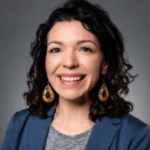
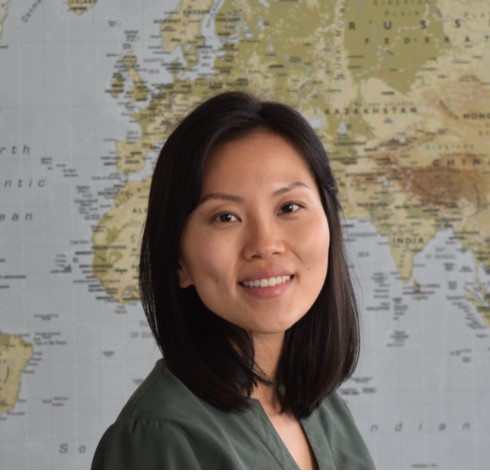
CSDE is hosting office hours to help you prepare data visualizations for PAA! Join CSDE Training Core PI Audrey Dorélien, 2026-2027 CSDE Seminar Chair Min Cha, and CSDE Training Director Jessica Godwin to get feedback and consultation on figures for your PAA oral presentations or posters. Both faculty and students are welcome!! Please sign up for a consultation slot here on 4/22/26 or 4/29/26 between 12 and 1 PM.
(read more)
|
 |
*New* CACHE Seminar: Using Flood and Interactive Mobility Data in Exposure Research (04/23/26)
|
Join CACHE on April 23 at 12 pm PT/3 pm ET for a virtual seminar on “Using Flood and Interactive Mobility Data in Exposure Research,” featuring James Elliott, Rice University, and Alex Priest, University of Alberta. This seminar provides an overview of how one can integrate diverse data sources to find, track, survey, and interview residents on the front lines of “climate retreat” nationwide (many of whom are aging homeowners). It highlights relevant challenges, emergent insights, and translation to web-based interactive tools. More information can be found here.
(read more)
|
 |
Data Science and Demography Training (DSDT): Applications due 04/24/26
|
CSDE is pleased to announce the availability of 12-month fellowships supported by the NIH Training in Advanced Data Analytics (TADA) T32 fellowship program. These Data Science and Demography Training (DSDT) fellowships begin mid-September 2026. There are three openings for the DSDT fellowship program this year. The fellowship program is available to U.S. Citizens or Permanent Residents. The goal of the training grant is to provide rigorous training in advanced data science methodologies for the next generation of behavioral, social science and population health researchers or to provide advanced demographic training for data scientists. More information is available here. Applications are due Friday, April 24, 2026, by 5:00 PM PT.
(read more)
|
 |
CACHE at PAA 2026 Workshop Registration: Measuring Heat for Use in Population Research (05/06/26)
|
Heat is one of the most frequently examined environmental influences on population health, and a wide variety of data sources exist to measure exposure. This pre-PAA workshop, sponsored by the Center on Aging, Health, and Environment (CACHE), provides an overview of heat measures and examples of two, including hands-on experience with code available via the CACHE website. Participants will generate temperature exposure measures from publicly available data, as well as wet bulb temperatures. The Universal Thermal Climate Index data will also be demonstrated and linked to population data. Learn more and register here. This workshop will take place in St. Louis, Missouri on May 6, 1-5:30 PM CT . Please note you must be registered for PAA in order to attend.
(read more)
|
|
*New* CACHE Seminar: Tracking the Mortality Burden Associated with Extreme Weather Events in the United States (05/15/26)
|
Join CACHE on May 12 at 11 AM PT for a online seminar on, “Tracking the Mortality Burden Associated with Extreme Weather Events in the United States: Implications for Older Adult Health,” featuring Dr. Kai Chen of Yale School of Public Health. Extreme climate-related hazards, such as wildfire smoke, extreme temperatures (both heat and cold), floods, and drought, are increasingly recognized as major threats to human health and well-being in the United States. These events contribute to substantial premature mortality, which in turn imposes significant economic losses on society. However, the public often lacks clear, science-based information that captures the scale of these damages and makes them accessible across different regions. To address this gap, the Climate, Health, and Environment Nexus (CHEN) Lab at the Yale Center on Climate Change and Health recently developed a dashboard that attributes premature mortality in the contiguous United States to these extreme climate events: XToll: eXtreme-weather Toll Tracker. Register here.
(read more)
|
|
Apply Now to CSDE’s NIH Grant Writing Summer Program (05/15/26)
|
The CSDE Development Core is once again hosting its annual Grant Writing Summer Program (GWSP) to assist scholars (UW postdocs, researchers, and professors affiliated or planning to affiliate with CSDE, as well as other researchers in the Seattle area) in preparing applications to the National Institutes of Health (NIH). Applications are now open and due May 15! More info here, and application page here. Note that the program is in person and meets once every two weeks, ate June – mid Sep, on the UW Seattle campus. Final schedule is set based on the schedules of the selected participants.
Make sure to read all the FAQ's. Past participants report great success, and lots of support and even fun along the way. Applications are due May 15. Additional questions? Contact goodreau@uw.edu.
(read more)
|
|
Call for Applications: Max Planck Institute for Demographic Research (MPIDR)- IMPRS-PHDS (Due to CSDE 05/26/26)
|
CSDE collaborates with the Max Planck Institute for Demographic Research (MPIDR) in a doctoral training program called the International Max Planck Research School for Population, Health and Data Science (IMPRS-PHDS). This program is based in Rostock, Germany, but includes 12 doctoral programs in the U.S. and Europe. CSDE has one IMPRS-PHDS fellowship application slot available to current CSDE Trainees. The fellowship funding will support a one quarter research stay at the MPIDR any time between July 1, 2026 and June 30, 2027. Information about the program, the faculty, and partner institutions can be found here. Applications are due to CSDE by Tuesday, May 26. Apply here.
(read more)
|
 |
Fireside Chat with the NIH Director at the PAA 2026 Annual Meeting (05/08/26)
|
The Population Association of America invites you to join upcoming fireside chat with the NIH Director, Dr. Jay Bhattacharya, at the PAA 2026 Annual Meeting, on Friday, May 8, 2026, 1:30 – 2:45pm in the Ferrara Theater (1st Floor) of the America’s Center. This plenary session, “NIH and the Future of Population Research: A Conversation with the NIH Director”, will focus on broad issues shaping population research, such as NIH strategic priorities, funding levels, open science/reproducibility, new methods of inquiry/AI, science communication, and the future of social and behavioral research. Professor Will Dow (UC-Berkeley) will moderate.
(read more)
|
 |
UW Data Science & AI Accelerator Accepting Summer 2026 Proposals (04/26/26)
|
The Data Science and AI Accelerator pairs eScience Institute data scientists with researchers from any field of study to work on focused, collaborative projects. Collaborations may center on analysis of an existing dataset to answer a specific research question, an implementation of software for processing or analyzing data, data visualization tools, or tools for data interpretation. This program is centered around building capacity — helping researchers to learn the skills and tools they need to do their projects rather than providing people to write code for them. Projects for Summer 2026 must be received by April 26 at 11:59 PM PT.
(read more)
|
 |
Call for Papers: Wittgenstein Centre Conference 2026 on Demography and Human Capital (04/30/26)
|
The call for submissions for the Wittgenstein Centre Conference 2026 (WIC2026) “Demography and Human Capital” is now open! This conference aims to advance theories, data, and multi-dimensional demographic methods for modelling human capital formation and its dynamics over time, and to connect cutting-edge evidence to policy debates globally. Human capital – education, skills, health, and capabilities – is a central driver of demographic change and a key lens for understanding social and economic development.
(read more)
|
 |
Call for Papers: Northwest Preparedness and Resilience Conference (04/30/26)
The Northwest Preparedness and Resilience Conference brings together an interdisciplinary group of regional practitioners, researchers and other partners working across a range of disaster-related fields. This year’s conference will take place on the University of Washington campus in Seattle on September 16-17, 2026. Abstract submissions are now open for those interested in presenting at this year’s conference! We invite researchers and practitioners from all disaster science and preparedness-related disciplines to submit abstracts focused on topics related to preparedness and resilience. (read more)
|
 |
Call for UW Student Research Proposals: Parvin E’tesami Student Support Fund (05/05/26)
|
The UW Middle East Center announces the 2025-26 competition for the Parvin E’tesami Student Support Fund. We invite applications from undergraduate and graduate students enrolled at the University of Washington in all disciplines, including international students, who are engaged in the study of the Middle East and North Africa and who will be enrolled at the University of Washington during the 2025-26 academic year. The application deadline is May 5, 2026. Apply now: https://forms.office.com/r/yYvSmDbfUs
(read more)
|
|
*New* Call for Grant Proposals from Non-Profits: Social Justice through Philanthropy (05/06/26)
|
The University of Washington is currently inviting nonprofit organizations to submit grant proposals for a practice-based UW course called Social Justice through Philanthropy, in which students develop critical thinking skills and practical knowledge regarding philanthropic giving in support of international issues. The course represents a unique partnership between The University of Washington’s Law, Societies & Justice Department, and the Philanthropy Lab, a Texas-based foundation that promotes philanthropy education in universities and colleges throughout the United States. This year, Social Justice through Philanthropy will be providing $75,000 worth of grants to international NGOs doing human rights, development, and humanitarian work. The $75,000 will be awarded through one $30,000 grant, two $15,000 grants, and two $7,500 grants in order to support five organizations in total.
This year, the students in Social Justice through Philanthropy have decided to focus their giving to organizations and initiatives broadly promoting five of the Sustainable Development Goals: SDG 3, Good Health & Well-Being; SDG 4, Quality Education; SDG 5, Gender Equality; SDG 13, Climate Action; SDG 16, Peace, Justice, and Strong Institutions. The deadline for proposals is May 6, 2026. To participate, please upload your application here as a single PDF file.
(read more)
|
 |
IPUMS Workshops and Events at PAA (05/06/26 – 05/08/26)
|
IPUMS will be exhibiting at the PAA 2026 Annual Meeting. Stop by their booth to talk with IPUMS research staff. Share any powered by IPUMS work on the PAA program so we can highlight your session and bring some specialty IPUMS swag for you. IPUMS also invites you to connect at these PAA events:
- Advances and Resources in Linking Full Count Census Data from IPUMS: Wednesday, May 6; 9:00am-2:00pm | America’s Center Room 103
- Harmonizing Geographic U.S. Census Data Across Time: Resources from IPUMS NHGIS: Thursday, May 7; 6:30-7:30pm | Marriott St. Louis Grand - Room L1
- The Future of DHS: Supplemental and Alternative Data Sources: Friday, May 8; 6:00-7:30pm | Marriott St. Louis Grand - Room L6
(read more)
|
 |
Request for Proposals: Advancing Well-Being in the Arts and Economic Mobility (LOIs due 05/12/26)
|
As a part of its Advancing Well-Being in the Arts Initiative’s Field Studies program, Wallace is interested in funding a small set of research studies that investigate aspects of how community-based arts organizations contribute to the economic mobility of their communities. “Communities” may include organizational staff, artists, audiences, program participants, local constituents served, and/or others as defined in proposals. For this RFP, the Wallace Foundation broadly defines and understands economic mobility, and pathways to economic mobility, as emerging through access to training and preparation, expanded social and professional networks, high quality jobs, as well as to basic needs such as safe neighborhoods, housing, health care, and food. However, we are eager to learn, through the studies to be funded, how arts organizations themselves conceptualize, define, and support economic mobility in their communities. To be invited to submit a full proposal, you must submit a 3-4 page letter of interest by May 12. Learn more here.
(read more)
|
 |
*New* Call for Abstracts: 2026 International Conference on Aging in the Americas (05/31/26)
The Call for Abstracts is now open for the 2026 International Conference on Aging in the Americas (ICAA). The conference will be held on September 24–25, 2026, in Chicago, Illinois, and will center on the theme Aging and Health in the Americas. We invite abstract submissions from emerging and early-career scholars in the social sciences, particularly those whose work focuses on Latino health and aging. Abstracts are due by May 31, 2026. All emerging scholars will also have the opportunity to participate in a mentored publication program. (read more)
|
 |
*New* Call for Abstracts: Special Issue of Studies in Family Planning on Rethinking Contraceptive Futures (06/30/26)
|
Studies in Family Planning is calling for abstract submissions for a special issue on “Rethinking Contraceptive Futures,” by June 30, 2026. This call for abstracts invites contributions that broaden and challenge traditional understandings of contraceptive use, access, and meaning. Contributions may engage explicitly with family planning debates but should foreground contraceptive practices and their evolving meanings within broader social and demographic paradigms.
(read more)
|
 |
*New* Call for Papers: Journal of Population Research Special Issue on Place-based Demography for Regional Planning (06/30/26)
The Journal of Population Research invites invites contributions from population scholars—including demographers, population geographers and regional scientists—interested in the use of demography as a tool to inform territorial policies and regional planning. This special issue, “Place-based Demography for Regional Planning,” will be edited by CSDE External Affiliate Amy Spring (Georgia State) and Federico Benassi. Contributions may address a wide range of topics, including but not limited to depopulation, population ageing, mobility and residential segregation, and population projections. Submissions may refer to different empirical contexts and territorial scales, and may adopt methodological, applied or theoretical perspectives. A key requirement is a strong territorial perspective, whereby spatial units are not treated merely as classificatory variables but as active dimensions of demographic analysis. Contributions engaging with theoretical debates—particularly those reflecting on the role of demography in territorial governance and spatial planning processes—are especially welcome. More information at the following link: https://link.springer.com/collections/fejdaggjjb
(read more)
William T. Grant Foundation Research Grants on Improving the Use of Research Evidence (07/29/26)
The William T. Grant Foundation invites proposals for research grants on improving the use of research evidence by July 29, 2026. The award amounts range from $25,000 -$1,000,000. This program funds research studies that examine strategies to improve the use of research evidence in ways that benefit young people ages 5-25 in the United States. Studies should advance theory and build empirical knowledge on ways to improve the use of research evidence by policymakers. (read more)
|
 |
*New* Register Now for 2026 Northwestern Main and Advanced Causal Inference Workshops (Starting 08/03/26)
|
The Northwestern Main and Advanced Causal Inference Workshop will hold its 15th annual meeting on Research Design for Causal Inference at Northwestern Law School in Chicago, IL. The main workshop takes place Monday – Friday, August 3-7, and the advanced workshop follows, Monday – Wednesday, August 10-12, with an optional machine learning primer on Sunday afternoon, August 9.
What is special about these workshops:
1. World-class speakers working at the frontier of causal inference research
2. Stata and R Coding sessions with exclusive access to the dedicated repository
3. Breakout sessions for feedback on your own research
In person-registration is limited to 125 participants for each workshop, so hurry up and register for in person attendance! There will also be a Zoom option, but attending in person is encouraged. Get more information and register now. (read more)
|
 |
Call for Papers: Special Issue of Studies in Family Planning on Pandemic and Epidemic Impacts on Reproduction, Sexual and Reproductive Health, and Family Dynamics (09/15/26)
CSSCR Spring 2026 Workshops
|
The Center for Social Science Computation and Research (CSSCR) released its spring workshop schedule. The bulk of sessions focus on data analysis and analytical methods using Codex, Atlas.ti, Python, R, and Stata. This quarter, CSSCR will also have workshops on how create an academic research poster using PowerPoint.
(read more)
|
|
|