Read About CSDE’s Accelerate Policy and Research for Greater Impact Initiative
|
This winter and spring, CSDE piloted a program to address the demand for evidence-based policy-making and program design. Many public-serving organizations recognize the value of research for the success of their programs, but are often constrained by limited budget, time, or staff capacity to design and implement that research. The Center for Studies in Demography and Ecology (CSDE), with support and inspiration from the Social Science Research Council’s Public Innovations Program (SSRC), led the Accelerate Policy and Research for Greater Impact initiative. Visit these links to read our final report and view our executive summary.
Through a carefully-designed process, CSDE connected UW researchers to public-serving organizations, helped forge a new path for their research, and advanced the probability of “good fit” matches to potential funders. Project participants included those from public serving organizations, including Sound Transit, Seattle City Light, Walk About Yakima, the Washington Attorney General’s Office, Build 2 Lead, Washington Employment Security Department, and Washington State Court Center for Research. Joining the public serving organizations were UW research collaborators representing scientists from the College of Arts & Sciences, College of Engineering, the Evans School of Public Policy & Governance, the School of Law, the School of Social Work, the School of Public Health, the School of Medicine, and the Center for Studies in Demography & Ecology. By the end of the second meeting, every selected organization walked away with the building blocks of a strong research project proposal.
(read more)
|
 |
Bratman Featured in Psychology Today Article on Nature Immersion Benefits
|
Humans’ relationship with nature has evolved over the years. While many enjoy spending time in nature by hiking, camping, and more, others seek to avoid nature and create innovations that counter being immersed within nature. However, nature immersion has been shown to improve mental health and well-being. In the Psychology Today article, “Seeing Green: Nature Immersion Has Its Benefits”, the author discusses the psychological research on nature immersion. CSDE Affiliate Gregory Bratman (Environmental and Forest Sciences) and his colleagues are featured in the article with their review of existing evidence and the conclusions they drew from it. Dr. Bratman and his colleagues conclude that one, “evidence supports an association between common types of nature experience and increased psychological well-being,” and two, “evidence supports an association between common types of nature experience and a reduction in risk factors and burden of some types of mental illness.” To read the full article, visit this link.
(read more)
|
 |
Bourassa Featured in King 5 News Article on Seattle-Area Housing Market
|
CSDE Affiliate Steven Bourassa (Real Estate) was recently featured in the King 5 News article, “More Seattle Homes Hit Market, but Sales Lag: ‘Not Great for Buyers or Sellers’.” Seattle-area home prices fell for the third consecutive month in March as elevated mortgage rates continued to weigh on buyers and sellers. Redfin reported the median sale price in the Seattle area was down 2% in the four weeks ending June 14, while pending sales fell 11.8%. Dr. Bourassa told King 5 that, “the issue is that the greater numbers of listings are not accompanied by corresponding increases in transactions. The implication is that many sellers would have to drop their asking prices if they really wanted or needed to sell. So, not great for sellers or buyers.” To learn more about Dr. Bourassa’s findings and to read the full article, visit this link.
(read more)
|
 |
West Featured in Knowable Magazine Article on How AI Can be Used to Fight Fake News
|
In recent years, when artificial intelligence has been involved in media, especially social media, it has had the reputation of spreading false information. Many people don’t trust AI because of the dangerous replications that it can create. However, researchers say that AI also has the ability to sift through various media platforms and help people identify and understand what is fake news, and could help combat the rise in online misinformation. In the Knowable Magazine article, “AI Shows Promise in the Fight Against Fake News,” the author discusses the future of AI and the multiple ways that AI can be used for good. CSDE Affiliate Jevin West (Information School) is featured many times throughout this article discussing the use of AI and how in order to stop fake news that was made with AI in the first place, “we should fight fire with fire.” For more information on the use of AI in the media, visit this link to read the full article.
(read more)
|
 |
Swanson Publishes in the Algerian Journal of Medical and Health Research
|
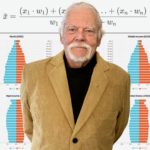
CSDE External Affiliate David Swanson (UC Riverside) recently published, “On the Future Mortality of Algeria” in the Algerian Journal of Medical and Health Research. In this article, Dr. Swanson introduces a new mortality forecasting approach that, unlike the Lee-Carter Method, is directly linked to the fundamental demographic equation. The method, the results of the ex post facto evaluation, and the forecast are all discussed along with suggested next steps in evaluating this approach. Visit this link to read the full article.
(read more)
|
 |
|
|
Stay Up to Date On CACHE Opportunities and Seed Funding
The Center for Aging, Health & Environment (CACHE) is a virtual research center advancing interdisciplinary collaboration on disaster and weather-related health impacts on older adults. CACHE’s Opportunity Corner links researchers to calls for abstracts, funding, virtual seminars and more. CACHE also provides seed grants annually to support research integrating social and environmental data. Follow along here. (read more)
|
 |
*New* Recent Data Releases from IPUMS USA, IPUMS CPS, and IPUMS NHGIS
- IPUMS USA
- New versions of the variables EDUC, HIGRADE, and INCTOT are available for the 1950 full count data. This update is the result of new data capture and represents a significant improvement in the accuracy of these measures. Check out the details on the Full Count Data web page.
- IPUMS CPS
- IPUMS CPS has added the May 2026 basic monthly data and updated the COUNTY variable to include additional IPUMS-derived county assignments based on the Census place-to-county population overlap. The new county assignments improve geographic identification of households whose county was not reported in the original CPS; they are a useful tool for geographic classification of these households, but should not be used as complete county identifiers.
- IPUMS NHGIS
- NHGIS has released its sixth set of GIS boundary files for 1980 census blocks. This release adds blocks for 52 metro areas including Raleigh-Durham; Knoxville; Albuquerque; Columbia, SC; Colorado Springs; Augusta, GA-SC; Harrisburg; and Chattanooga. In total, NHGIS now provides 1980 block boundaries for 238 metro areas.
(read more)
|
 |
*New* CACHE July 2026 Newsletter
|
CACHE facilitates research and fosters collaboration among a wide-range of researchers working at the nexus of aging, health and climate change through targeted interdisciplinary training, information sharing, and investments in research support. To view their July 2026 Newsletter that contains upcoming CACHE Seminars, Call for Papers, CACHE Seminar Recordings, and more, follow this link: CACHE July 2026 Newsletter.
(read more)
|
 |
New Guidance on International Collaborations
|
The UW has issued new guidance on managing international research collaborations that might yield security concerns and require appropriate diligence. Faculty, staff, postdocs, and students should familiarize themselves with University research security policies and requirements and exercise appropriate diligence when participating in international collaborations, professional activities, and scholarly exchanges.
(read more)
|
 |
CACHE Symposium at the GSA Annual Scientific Meeting 2026
|
CACHE will be at the GSA 2026 Annual Scientific Meeting, November 4 – 7 in National Harbor, MD, and is organizing a symposium “Pushing the Boundaries on Aging-Climate Topics and Methodologies”. To learn more about the GSA and to connect with leaders in aging and gerontology, find out more here. This year’s theme: “Reinforcing Resilience in Aging Science, Research and Education.”
(read more)
|
|
NIH R25 Education Grants
|
NIH just released three Parent Announcements for R25 Education Grants, closing May 29, 2029.
The National Institutes of Health (NIH) Research Education Program supports research education activities in the mission areas of the NIH.
(read more)
|
 |
*New* “Banning ‘Statistical Noise’: Understanding DAO 216-26 and Its Consequences” co-sponsored by the American Statistical Association (ASA) and the Association of Public Data Users (APDU) (07/13/26)
|
The Census Quality Reinforcement (CQR) Task Force invites you to join an upcoming webinar, “Banning ‘Statistical Noise’: Understanding DAO 216-26 and Its Consequences,” co-sponsored by the American Statistical Association (ASA) and the Association of Public Data Users (APDU), on Monday, July 13, from 12:00–1:30 PM ET.
Last month, the Department of Commerce issued a new policy restricting the privacy protection or “disclosure avoidance” methods used by the Census Bureau and the Bureau of Economic Analysis (BEA).
(read more)
|
 |
CSSCR Summer Workshop: Efficient R Programming: Working with Many Columns, Functions, and Models (07/20/26)
|
A good rule of thumb in data wrangling and programming is: if you find yourself copying and pasting a block of code more than twice, it’s time to stop and think about a more efficient approach. This course will introduce functional programming and other techniques to reduce redundancy and enhance the computational efficiency of your R code. We will cover practical skills frequently used in data projects, such as manipulating multiple columns, writing anonymous functions, using map(), nesting dataframes within tibbles, and running multiple regressions and comparing them results simultaneously. Attendees are expected to have basic familiarity with data wrangling using dplyr in R.
- Instructor: Brian Leung, CSSCR Consultant
- Date: Monday, July 20, 2026
- Time: 10:00am – 11:20am
- Location: Savery 121 (Small Lab)
- Register here.
(read more)
|
|
CSSCR Summer Workshop: Geospatial Analysis in Python (07/27/26)
|
This workshop introduces core concepts and tools for working with spatial data in Python, providing overview for geospatial data models, vector analysis with Shapely/GeoPandas, and raster processing with Rasterio/GDAL. Participants are encouraged to take an introductory Python course but not required.
- Instructor: Yuying Xie, CSSCR Consultant
- Date: Monday, Jul 27, 2026
- Time: 1:30pm – 2:50pm
- Location: Savery 117 (Big Lab)
- Register here.
(read more)
|
|
CSSCR Summer Workshop: Introduction to Agentic Coding with Codex (07/28/26)
|
Codex is OpenAI’s coding agent, a software that has access to your project’s files and can generate code, reorganize your directories, and make slides and reports. This workshop introduces a workflow with the codex app. Note: although Codex is currently available to those with a free ChatGPT subscription, it is likely that on the date of the workshop it will require a $20/month level plan. This workshop is great for you if you have already accessed or plan to access a “Plus” level subscription.
- Instructor: Tynan Challenor, CSSCR Consultant
- Date: Tuesday, July 28, 2026
- Time: 10:00am – 11:20am
- Location: Savery 121 (Small Lab)
- Register here.
(read more)
|
|
CSSCR Summer Workshop: Atlas.ti for Qualitative Thematic Analysis (07/31/26)
|
This workshop provides a practical introduction to working in ATLAS.ti, by marrying the fundamentals of the qualitative methodology with the functionality of this program. This will include conceptualizing and creating quotations, codes, memos, and comments followed by establishing thematic relationships through systematic analysis. The hands-on course assumes no familiarity with Atlas.ti, however, requires CSDE Terminal Server student access (sign up here with UWNetID).
- Instructor: Baishakhi Basu, CSSCR Consultant
- Date: Friday, Jul 31, 2026
- Time: 3:00pm – 4:20pm
- Location: Savery 121 (Small Lab)
- Register here.
(read more)
|
|
Register Now for 2026 Northwestern Main and Advanced Causal Inference Workshops (Starting 08/03/26)
|
The Northwestern Main and Advanced Causal Inference Workshop will hold its 15th annual meeting on Research Design for Causal Inference at Northwestern Law School in Chicago, IL. The main workshop takes place Monday – Friday, August 3-7, and the advanced workshop follows, Monday – Wednesday, August 10-12, with an optional machine learning primer on Sunday afternoon, August 9.
(read more)
|
 |
*New* Measuring spatial accessibility to healthcare: An applied example using IPUMS PMA (08/11/26)
|
August 11, 10:00am CT | Virtual
Registration Coming Soon via the IPUMS Events page
There is a strong connection between place, healthcare access, and health. However the data traditionally used to measure spatial access are not universally available; this issue is particularly acute in countries with the poorest health outcomes. This webinar will build on a series of posts on the IPUMS DHS Spatial Analysis and Health Research Hub to provide an interactive demonstration of a healthcare accessibility workflow using globally-available, free, and high-resolution data and attach the resulting measure to IPUMS PMA data.
(read more)
|
|
Spencer Foundation Vision Grants: Express Intent to Apply by 08/12/26
|
The Spencer Foundation seeks proposals for Vision Grants up to $75,000 by August 12, 2026. The Vision Grant program provides scholars and collaborators with the time, space, resources, and support to plan a large-scale study or program of research: geared toward real-world impact to make education systems more equitable; drawing on research across disciplines and methods; and developed through meaningful and equitable collaboration with practitioners, policymakers, communities, and other partners; and focused on transforming educational systems.
(read more)
|
 |
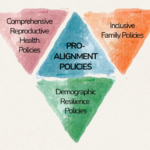
*New* Hybrid Conference: Beyond Birth Rates: Advancing a Pro-Alignment Approach to Low Fertility in North America (08/20/26)
*New* Call for Papers: Workshop on Changing Fertility Preferences and Recent Fertility Decline – November 13-14 (Submissions due 08/25/26)
|
Call for papers for a small interdisciplinary workshop on Changing Fertility Preferences and Understanding Recent Fertility Decline, to be held at the Office of Population Research at Princeton University on November 13–14, 2026. The workshop will focus on new approaches to understanding fertility change, with particular attention to the measurement of fertility preferences and to factors explaining changing fertility behavior across different world regions. Submissions are due by August 25, 2026. Click here for more information.
(read more)
|
 |
Call for Papers: Aftermath of a Pandemic – Changes in Mortality and Health (09/11/26)
|
IUSSP and its co-organizes invite papers for a workshop focused on “Aftermath of a Pandemic: Changes in Mortality and Health.” Post-pandemic periods can reveal or amplify existing health inequalities, and the effects of pandemics often extend beyond the acute phase of infection, influencing long-term patterns of mortality and overall population health. This workshop will focus on these poorly understood effects.
The workshop will be hosted by the Oslo Metropolitan University on January 28-29, 2027
(read more)
|
 |
*New* The American Geographical Society’s Annual Fall Symposium – Geography 2050: Africa Shaping Tomorrow – November 19-20 (Proposals due 09/15/26)
|
Join policymakers, geographers, researchers, business leaders, and innovators from across Africa and around the world for the Geography 2050: Africa Shaping Tomorrow Symposium. Together, participants will explore the critical geographic forces shaping Africa’s future, from urbanization and climate resilience to geospatial technologies, economic development, and regional cooperation.
Click here to register or submit abstracts.
(read more)
|
 |
Call for Papers: Special Issue of Studies in Family Planning on Pandemic and Epidemic Impacts on Reproduction, Sexual and Reproductive Health, and Family Dynamics (09/15/26)
Call for LOIs: Capland Foundation for Early Childhood (09/30/2026)
|
The Caplan Foundation for Early Childhood seeks LOIs by September 30, 2026. The Caplan Foundation for Early Childhood is an incubator of promising research and development projects that appear likely to improve the welfare of young children, from infancy through 7 years, in the United States. Welfare is broadly defined to include physical and mental health, safety, nutrition, education, play, familial support, acculturation, societal integration and childcare.
(read more)
|
 |
Call for Papers: IJPDS Special Issue on AI in Population Data Science (09/30/26)
Call for Papers: IJPDS Focus Issue on People and the Criminal Justice System (10/30/26)
|
People who have contact with the criminal justice system experience disproportionate social and health disadvantage both prior to and following their justice involvement, compared to the broader community. Achieving equity in areas such as health, housing, and education among people with justice system involvement should be a global priority. Simultaneously, the need to reduce offending and recidivism is central to improving public safety, strengthening justice system legitimacy, and reducing future victimisation.
(read more)
|
 |
Call for Papers for a Special Issue of The Milbank Quarterly on How Policy Contexts Impact Population Health in the United States (11/01/26)
|
In partnership with the Center for Aging and Policy Studies and Center for Policy Research at Syracuse University, The Milbank Quarterly will publish a special issue to advance knowledge on the connections between policies and population health in a changing U.S. context. The special issue seeks empirical, methodological, and theoretical contributions on the topic. Of particular interest are papers that link changes and variation in policy contexts to health outcomes, identify mechanisms linking policies to outcomes, or propose new ways to measure and conceptualize policy contexts for health research. See the call for papers for more information.
(read more)
|
 |
Call for Nominations: 2027 IUSSP Early Career Awards (11/01/26)
|
The IUSSP Early Career Awards aim to honour outstanding contributions to the broad field of population studies by early career scholars in different world regions and boost the global visibility of their achievements. Nominate colleagues by November 1, 2026. Nominees must have received their PhD within the last seven years and be IUSSP members. For more information about the Award and the nomination procedure and to fill out the application form, please go to IUSSP Early Career Awards.
(read more)
|
|
Call for Contributions to Special Collection on Kinship Demography (12/15/26)
Call for Papers for the Special Collection “Measuring Population Health in the Era of Climate Change” in Population Health Metrics (02/26/27)
|
|