CSDE Welcomes Qiuju Guo as a Visiting Scholar!
|
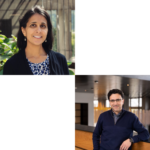
Qiuju Guo is an Associate Professor in the School of Sociology, Huazhong University of Science and Technology, joining the Center for Studies in Demography and Ecology (CSDE) at the University of Washington as a visiting scholar for a one-year stay.
Dedicated to gerontological research, Dr. Guo’s core research interests include family and old-age support, aging health and well-being, and older migrants. She has published a series of peer-reviewed papers in both Chinese and English on sociological issues related to older adults. Currently, she is leading a research project on the impacts of intergenerational transmission and feedback on urban adaptation among rural older migrants, exploring social issues concerning aging migration and intergenerational relations.
During her visit to CSDE, Dr. Guo aims to conduct in-depth academic exchanges and collaborative research in demography and aging studies. Colleagues and students are warmly welcome to visit her at Office 218F for discussions on any topics of mutual interest.
(read more)
|
 |
Seattle City Light Seeking Research Collaborators to Apply for NSF Funding for Wildland Fire Research and Education (DUE NOW)
*New* March 2026 Issue of Studies in Family Planning Now Available
|
The Population Council recently announced the March 2026 issue of Studies in Family Planning, a leading peer-reviewed journal publishing public health, social science, and biomedical research from around the world. This issue includes a wide range of articles covering diverse topics from male and female contraception, pregnancy acceptance and ambivalence, and more. Read the new issue here.
(read more)
|
 |
*New* Ohio Population Consortium Webinar: The Relational Context of Fertility Goals (03/25/26)
|
Join the Ohio Population Consortium on March 25 at 8 AM PT for a webinar on “The Relational Context of Fertility Goals.” Register for Zoom link. Most children are born into two parent families, and romantic relationships are likely the most proximal determinants of fertility goals. Yet relatively little research is focused on the relationship context of fertility goals. A major issue is that most demographic studies are restricted to measures of relationship status and do not consider more refined measures of the relationship quality and dynamics.
(read more)
|
 |
*New* Center for Migration Studies Webinar: New Study Reveals Significant Damage to the US Economy from End of Birthright Citizenship (03/25/26)
|
As the U.S. Supreme Court prepares to consider the future of birthright citizenship – a right guaranteed by the 14th Amendment to the U.S. Constitution – new research is shedding light on what is at stake should the Administration succeed in eliminating this long-established protection.
The Center for Migration Studies of New York (CMS) invites you to join us for a webinar on Wednesday, March 25 from 10 – 11 AM PT / 1 - 2 PM ET exploring new findings from the forthcoming study “Multi-Trillion Dollar and Multi-Million Worker Contributions: An Economic Accounting of Birthright Citizenship.” The study will be available on the CMS website two days prior to the webinar.
(read more)
|
 |
*New* Curran with the Independent Census Scientific Advisory Committee Host Public Meeting on Recommendations (03/26/26)
On March 26, the Independent Census Scientific Advisory Committee (I-CSAC) will host its spring meeting online and open to the public. The committee will be presenting its recommendations on the Census Bureau’s new methodologies for the generation of vintage population estimates, administrative records coverage by race/ethnicity, and the race/ethnicity coding improvement project. The meeting will be held from 11 AM – 2 PM PST on March 26 and more information is available here. CSDE Director Sara Curran and Dr. Ron Prevost co-chaired and will facilitate the session on new methodologies for vintage population estimates. (read more)
|
 |
NIH Reorganizes Study Sections
Center for Social Science Computation and Research (CSSCR) Offers Drop-In Office Hours
|
The Center for Social Science Computation and Research (CSSCR) offers drop-in office hours for computational and statistical issues in research and coursework. This service is offered Monday - Friday 8 AM - 6 PM in Savery 119. We have graduate student staff from the departments of Anthropology, Economics, Education, Geography, Political Science, Social Work, and Sociology. The center supports R, Stata, Python, ArcGIS, QGIS, Matlab (limited), and Atlas.ti. The Center’s consultants can assist with data management, data wrangling, exploratory data analysis, and qualitative analysis. CSSCR also specializes in identifying and procuring data sets that can be used for research or course projects.
(read more)
|
 |
*New* IPUMS Data Updates: ACS and PRCS, NHGIS, and CPS
|
IPUMS released multiple data updates, including ACS and PRCS data, NHGIS data, and CPS data.
IPUMS USA
The 2023 5-year Public Use Microdata Sample (PUMS) data for the ACS and PRCS are now available on IPUMS USA. See the IPUMS USA revision history for more details
IPUMS NHGIS
IPUMS NHGIS has released its second version of GIS boundary data for 1970 census blocks.This release adds blocks for 17 metro areas, including Los Angeles, Pittsburgh, St. Louis, Houston, Newark, Seattle, Atlanta, San Diego, Buffalo, Miami and Nashville. The total count of metro areas with 1970 block boundary data is now 38, including 21 of the top 25 by 1970 population.
IPUMS CPS
IPUMS CPS has added the February 2026 basic monthly data. Note that the January 2026 basic monthly data were re-released by the Census Bureau last week; the originally released version did not account for new population controls (see our blog post on weighted counts in January CPS to learn more). We are working on updating the affected variables, which include weights as well as some geographic and earnings variables. We will update the IPUMS CPS revision history as soon as the data become available.
(read more)
|
 |
Populations is a New Journal Welcoming Submissions From You!
WA State Department of Housing Task Force Survey
|
The Washington State Department of Housing invites survey responses to inform recommendations for how to structure a new Department of Housing that will serve as the state’s coordinating and problem solving hub for ensuring adequate housing supply and housing stability for all Washingtonians. Your feedback will help inform the Task Force’s final report, due November 15, 2026, which will include recommendations on the mission, structure, programs, and goals of a new Department of Housing.
(read more)
|
 |
Population Reference Bureau Webinar on The Fertility Gap: Why Wanting Children Doesn’t Always Mean Having Them (03/25/26)
|
Despite global fertility decline, many people still hope to become parents or have more children. Yet wanting kids doesn’t always lead to planning for them, and planning doesn’t always lead to having them. Why does this gap exist?
Join the Population Reference Bureau for a timely webinar featuring two new studies that examine different dimensions of unrealized fertility. Luca Badolato (The Ohio State University) “The Fertility Desires - Intentions Gap in the United States", and Ester Lazzari (University of Vienna) will share her research entitled "Infertility and Unrealized Ideal Family Size". This event is hosted by the Center for Public Information on Population Research (CPIPR) at PRB the Coordinating Center for the NICHD Population Dynamics Centers Research Infrastructure Program. Register here.
(read more)
|
 |
European Doctoral School of Demography (EDSD) 2026-2027 (03/27/26)
|
The European Doctoral School of Demography (EDSD) is an eleven-month, fully funded program that aims to provide students with a comprehensive and rigorous education in demography to pursue their doctoral studies. The EDSD provides students with a comprehensive understanding of the causes and consequences of demographic change, population data, statistical and mathematical demography, as well as modeling, simulation, and forecasting techniques. The program’s coursework, taught by leading experts in the field, emphasizes strengthening the quantitative and programming skills of its participants.
(read more)
|
 |
Apply to Investigations in Disasters and Emergencies: Advancing Applied Learning in Disaster Research Response (03/27/26)
The University of Washington’s Center for Disaster Resilient Communities is offering a hands-on training program in environmental and public health disaster research methods and skills for up to 25 advanced graduate students and early career hazards and disaster researchers from across the United States. This training program aims to provide a launchpad for scholars to build on and carry out their own disaster and hazards research projects as well as opportunities for interdisciplinary networking and mentorship. (read more)
|
|
*New* CSDE Computational Demography Working Group: Kentaro Hoffman on Inference on Predicted Data and its Implications for Demography (04/01/26)
Call for Papers: Demog-Crazy 2026 Award (04/01/26)
The Quetelet Journal warmly invites population scientists to submit an abstract for consideration for the Demog-Crazy 2026 Award by April Fools Day 2026. Authors of shortlisted abstracts will be required to submit their full paper by July 1, 2026.
Inspired by the spirit of Belgian surrealism, the Demog-Crazy Award celebrates and publishes a scholarly article in population sciences that initially amuses readers with its title and summary, but ultimately provokes thoughtful engagement and inspires further reading.
(read more)
Applications Open for Panel Study of Income Dynamics (PSID) Data User Workshop (04/15/26)
The Panel Study of Income Dynamics (PSID), begun in 1968, is the world’s longest-running multigenerational household panel study. It is used to investigate scientific and policy questions about life course trajectories in health and well-being, intergenerational social and economic mobility, income and wealth inequality, family investments in children, neighborhood effects on opportunity and achievement, and many other topics. This five-day, in-person only workshop–held from June 15 – 19, 2026 at the University of Michigan will orient participants to the content and structure of the core PSID interview,its special topics modules, and its supplemental studies, including the Child Development Supplement (CDS) and the Transition into Adulthood Supplement (TAS). The workshop is designed for graduate students, postdoctoral fellows, junior faculty, and research professionals. Applications are due by April 15. (read more)
|
 |
*New* T32 Training Opportunity in Data Science and Demography: Applications due 04/24/26
|
CSDE has 3 openings for the Data Science and Demography Training (DSDT) program. The CSDE Data Science and Demography Training (DSDT) program is a 12-month fellowship for graduate students interested in pursuing a population research career or population health research career that applies advanced data science analytics. The program description is attached for your reference or more information is available here. The fellowship program will begin September 16, 2026, and is available to U.S. Citizens or Permanent Residents. Applications are due Friday, April 24, 2026, by 5:00 PM PT. Join CSDE for an Information Session on Wednesday, April 1, 2026 12:30-1:30 (in-person, Raitt 221, or Zoom: https://washington.zoom.us/j/96804967473 (Passcode: 244881)
(read more)
|
 |
UW Data Science & AI Accelerator Accepting Summer 2026 Proposals (04/26/26)
|
The Data Science and AI Accelerator pairs eScience Institute data scientists with researchers from any field of study to work on focused, collaborative projects. Collaborations may center on analysis of an existing dataset to answer a specific research question, an implementation of software for processing or analyzing data, data visualization tools, or tools for data interpretation. This program is centered around building capacity — helping researchers to learn the skills and tools they need to do their projects rather than providing people to write code for them. Projects for Summer 2026 must be received by April 26 at 11:59 PM. PT.
(read more)
|
 |
*New* Bill & Melinda Gates Foundation: Multiple Global Grand Challenges Grant Opportunities (04/28/26)
|
The Bill & Melinda Gates Foundation invites applications for the following Grand Challenges grant opportunities. Applications for all RFPs are due no later than April 28, 2026, at 11:30 AM Pacific Daylight Time.
(read more)
|
 |
*New* From Malthus to Musk: Searching for Population Equilibrium in East Asia (04/30/26)
|
Please join the East Asia Center for a special public panel, "From Malthus to Musk: Searching for Population Equilibrium in East Asia", that will feature CSDE Director Sara Curran and three other scholars on April 30 from 3:30 – 5 PM, in HUB 337, University of Washington.
From Malthus’s warnings of overpopulation to Musk’s urge to boost fertility, the drastic turn of humanity’s relationship with population growth is one of the defining features of East Asian societies. Adopting a regional and comparative perspective, we argue that intense family competition and proactive government intervention—both operating within the context of deep-seated cultural traditions—have defined the region's current demographic challenges. We conclude, however, that policy interventions alone will likely prove insufficient without addressing the fundamental shifts in social values and the complex interplay of economic, cultural, and political factors driving this historic demographic transformation.
(read more)
|
 |
Call for Papers: Northwest Preparedness and Resilience Conference (04/30/26)
The Northwest Preparedness and Resilience Conference brings together an interdisciplinary group of regional practitioners, researchers and other partners working across a range of disaster-related fields. This year’s conference will take place on the University of Washington campus in Seattle on September 16-17, 2026. Abstract submissions are now open for those interested in presenting at this year’s conference! We invite researchers and practitioners from all disaster science and preparedness-related disciplines to submit abstracts focused on topics related to preparedness and resilience. (read more)
|
|
*New* IPUMS Workshops and Events at PAA (05/06/26 – 05/08/26)
|
IPUMS will be exhibiting at the PAA 2026 Annual Meeting. Stop by their booth to talk with IPUMS research staff. Share any powered by IPUMS work on the PAA program so we can highlight your session and bring some specialty IPUMS swag for you. IPUMS also invites you to connect at these PAA events:
- Advances and Resources in Linking Full Count Census Data from IPUMS: Wednesday, May 6; 9:00am-2:00pm | America’s Center Room 103
- Harmonizing Geographic U.S. Census Data Across Time: Resources from IPUMS NHGIS: Thursday, May 7; 6:30-7:30pm | Marriott St. Louis Grand - Room L1
- The Future of DHS: Supplemental and Alternative Data Sources: Friday, May 8; 6:00-7:30pm | Marriott St. Louis Grand - Room L6
(read more)
|
|
William T. Grant Foundation Research Grants on Improving the Use of Research Evidence (07/29/26)
The William T. Grant Foundation invites proposals for research grants on improving the use of research evidence by July 29, 2026. The award amounts range from $25,000 -$1,000,000. This program funds research studies that examine strategies to improve the use of research evidence in ways that benefit young people ages 5-25 in the United States. Studies should advance theory and build empirical knowledge on ways to improve the use of research evidence by policymakers, (read more)
|
 |
*New* Call for Papers: Special Issue of Studies in Family Planning on Pandemic and Epidemic Impacts on Reproduction, Sexual and Reproductive Health, and Family Dynamics (09/15/26)
Registration Now Open: UW Department of Global Health 2026 Implementation Science Summer Institute
The UW Department of Global Health is pleased to announce that registration is now open for the 2026 Implementation Science Summer Institute, taking place August 17–21, 2026, on the University of Washington’s Seattle campus. Click here for more information. Registration is open until filled. This intensive, week‑long training is designed for researchers, practitioners, public health professionals, and leaders seeking to strengthen their ability to apply implementation science methods in real‑world settings. (read more)
|
 |
Coefficient Giving: Funding for Programs and Events on Global Catastrophic Risk, Effective Altruism, and Other Topics (Rolling)
This is a wide-ranging call for applications, seeking to fund programs and events in a variety of areas of interest to Coefficient Giving — including effective altruism, global catastrophic risks, biosecurity, AI for epistemics, forecasting, and other areas. “Programs and events” include scholarship or fellowship programs, internships, residencies, visitor programs, courses, seminars, conferences, workshops, retreats, etc., including both in-person and online activities. Coefficient Giving is open to funding programs or events aimed at individuals at any career stage. (read more)
|
 |
|