CSDE Supports Latino Center with Infographic on Latinos in Washington State
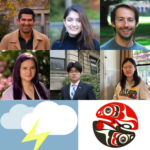
Did you know CSDE can help you with demographic data for your projects? For example, CSDE Research Scientist June Yang (Computational Demographer) recently provided the background data for the Latino Center for Health that contributed to a newly published infographic. The project is part of an initiative launched by CSDE Affiliate Leo Morales (General Internal Medicine) seeking to understand better the health needs of Washington’s Latino heritage residents. Dr. Morales describes the collaboration, "Working with CSDE and its scientific team to generate the demographic data to support this report was hugely helpful and made it easy to complete our project." If you are interested in assistance like this, please contact our staff for consultations here. (read more)
|
 |
Early and Gonzalez Publish Evaluation Results of a Bilingual Lay Mental Health Navigator Program
CSDE Affiliate Jody O. Early (Nursing and Health Studies) and CSDE Affiliate Carmen Gonzalez (Communications), in partnership with colleagues Janessa Graves (School of Medicine) and Julia Simoes (Communication) recently published a research brief, “Advancing Community-Based Mental Health Promotion: An Evaluation of a Bilingual Lay Mental Health Navigator Program“, in the peer reviewed journal, Health Promotion Practice. Early, Gonzalez, and co-authors present evaluation results of Mental Health Matters of Washington’s Peer Mental Health Navigator (PMHN) program, which provides six-weeks of bilingual training to lay community members who go on to provide peer mental health support, education, and resource navigation. Researchers used a non-controlled pre- and post-design with a 12-month follow up survey across seven cohorts of Spanish and English-speaking peer navigators (n = 141) over three years. Results demonstrated significant improvements across outcome measures, with the largest effect sizes observed in self-efficacy. Qualitative analysis revealed high program satisfaction, with participants particularly valuing comprehensive resources, skilled facilitation, and culturally responsive content. The findings support increased investment in community-driven, culturally and linguistically attune mental health promotion strategies that go beyond clinical interventions. (read more)
|
 |
Rodriguez Edits Special Issue on Social Work Science and Advanced Computational Methods
CSDE External Affiliate Maria Y. Rodriguez (University at Buffalo) served as co-editor for a special issue of Research on Social Work Practice on “Social Work Science and Advanced Computational Methods.” Rodriguez and co-editor, Jo Ann Lee, argue that advanced computational methods can help us work toward solving complex social issues. The included manuscripts leverage cutting edge methods like agent-based modeling, network science, and LLMs, all within specific practice-contexts, with the aim of offering actionable solutions to pressing practice problems. The manuscripts also suggest that advanced computational methods require social work insight and ethics to work best for humans. Dr. Rodriguez is actively recruiting doctoral students for her lab: her research page has more details. (read more)
|
 |
Berney and Co-Authors Research the Benefits of Streateries in Seattle’s University District
CSDE Affiliate Rachel Berney (Urban Design & Planning) and co-authors published the results of a study of right-of-way adaptations in Seattle’s University District that supported urban resilience during the pandemic in the Journal of the American Planning Association. In response to COVID-19, cities permitted streateries (street eateries), which enabled restaurants to operate despite restrictions on indoor uses, and many persisted after the lifting of COVID-19 restrictions. Berney and co-authors modified and supplemented Seattle’s (WA) Public Life Study protocol to observe and analyze streatery and sidewalk use. Besides supporting business continuity in a major disruption, streateries and parklets increased low intensity social interactions, chance encounters, and diversity of activities in the ROW, outcomes that correlate with increased social resilience. As a result of this study, Seattle adopted chance encounters as a standard metric in its protocol. (read more)
|
 |
The Population Reference Bureau Can Help Publicize Your CSDE-Related Research
|
|
CSDE is Deeply Saddened by the Passing of Alan Li
|
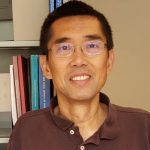
CSDE’s Senior Computer Specialist Alan Li passed Monday, February 23rd. We, his friends and colleagues, are devastated by this unexpected loss.
Alan was a kind and caring colleague. He was absolutely dedicated to providing the very best computing services for thousands of students, staff, and colleagues. He set a very high standard of IT systems and support and established CSDE’s computing core reputation. He also had a great sense of ironic humor. All who knew him benefited from his unique perspective on the world. While it was very hard to get him to take vacation, he was a world traveler, including serving as a US Peace Corps Volunteer in Haiti. He is survived by his son, who was the absolute center of his life. Alan Li will be deeply missed by all of us. To share a story or memory of Alan, please visit here. The family has not yet announced plans for a service, but we will update this page as soon as we hear from them about how they would like us to honor him.
(read more)
|
 |
Populations is a New Journal Welcoming Submissions From You!
*New* Seattle City Light Seeking Research Collaborators to Apply for NSF Funding for Wildland Fire Research and Education
*New* Having It All: Corinne Low (03/03/26)
|
Join the Wharton Club of Seattle in partnership with the UW Foster School of Business as we welcome Wharton Professor and author of Having it All, Dr. Corinne Low. Moderated by Vivienne Long, UW professor and former CMO of REI. Book copy and light refreshments are included with the admission price. Tickets for students are only $20 and it includes the book. Tickets for faculty are $35.
When: 03/03/26 from 6 - 8 PM
Where: UW Anthony's Forum in Dempsey Hall, 4273 E Stevens Way NE, Seattle
How: Link to registration
(read more)
|
 |
*New* WCPC Housing Roundtable: Exploring the Role of Developers in the Housing Ecosystem in Washington State (03/05/26)
The WCPC Housing Roundtable on March 5 from 9:30 – 11 AM will begin with a presentation by Bob Francis (Sociology, Whitworth University) that will make the case for the importance of better understanding developers as actors in housing markets, followed by a discussion about the current local/state policy environment, challenges facing developers of low-to-moderate income (LMI) and multi-family housing, differences across housing markets in the state, and efforts to expand the pool of developers. (read more)
|
 |
UW School of Public Health Center Discovery Expo (03/06/26)
|
The UW School of Public Health invites you to the UW SPH Center Discovery Expo on Friday, March 6, 2026 from 12 – 2 PM at the UW wǝɫǝbʔaltxʷ Intellectual House, Seattle campus. RSVP here. More than 30 centers and cores are invited to present their research and practice impact in an exhibition poster session format. The expo is our largest demonstration of how our centers create healthier communities in Washington and across the globe.
(read more)
|
|
UW Earth Lab: Two Upcoming Grant Opportunities (03/06/26)
EarthLab is now accepting applications for two new grant programs (up to $10,000 each) designed to support climate change and environmental justice research at the University of Washington. Applications are due March 6, 2026, at 5:00 PM PST. Incubator Grants offer funding to nurture ideas and launch partnerships for climate change or environmental justice research and action. Rapid Response Grants fund urgent data collection addressing emerging climate or environmental justice questions. (read more)
|
 |
Call for Submissions: 2026 Annual IAPHS Conference (03/10/26)
2026 IAPHS Annual Meeting: Health & Social Justice Sessions (03/10/26)
The IAPHS Committee on Health & Social Justice invites abstract proposals for the 2026 IAPHS Annual Meeting that explore methodological approaches for conducting rigorous, ethical, and trust-building research with hypermarginalized populations. For this call, hypermarginalized populations refer to communities who experience intensified and overlapping forms of structural exclusion, including (but not limited to) criminalization, displacement or houselessness, immigration enforcement, state surveillance, and chronic institutional neglect. We encourage submissions that recognize the heterogeneity within these groups and avoid treating any community as monolithic. (read more)
|
 |
EPA Grants for Wildfire Smoke Preparedness in Community Buildings (03/11/2026)
|
Award amount: $2,500.000
Number of applications UW can put forward: 1
OR internal deadline: 3/11/2026
OSP deadline: 4/6/2026
Sponsor deadline: 4/15/2026
Program Description: Wildfire Smoke Preparedness in Community Buildings is a federal grant program to enhance community wildfire smoke preparedness. This program provides grants to states, federally recognized Tribes, public pre-schools, local educational agencies, and non-profit organizations for the assessment, prevention, control, or abatement of wildfire smoke hazards in community buildings and related activities. (read more)
|
 |
*New* UW Social Sciences Data Science Summer Institute: Call for Faulty Proposals, Graduate RAs and Undergraduate Fellows (03/13/2026)
Call for Editors of Population & Development Review (03/16/26)
William T. Grant Scholars Program 2026 (03/18/26)
|
Organization: William T. Grant Scholars Program 2026 (Limited Submission Opportunity)
Award amount: Each Scholar receives exactly $425,000 over five years, including up to 7.5% indirect costs. Awards begin July 1 of the award year and are made to the applicant’s institution.
UW internal deadline: 03/18/2026
Description: The William T. Grant Scholars Program supports career development for promising early-career researchers. The program funds five-year research and mentoring plans that significantly expand researchers’ expertise in new disciplines, methods, and content areas. (read more)
|
 |
Population Health Applied Research Fellowship Program for UW Students (03/20/26)
|
The Population Health Applied Research Fellowship Program supports multidisciplinary teams of students to work on real-world population health challenges. Projects are sourced from external clients who play an important role in structuring project deliverables. Applications for this summer’s cohort will be accepted until 12 PM on March 20, from undergraduate and graduate students across all UW schools and colleges on all three UW campuses. The Summer 2026 Population Health Applied Research Fellowship team will work closely with stakeholders at the City of Seattle to research strengths and future recommendations to support children-friendly cities.
(read more)
|
|
European Doctoral School of Demography (EDSD) 2026-2027 (03/27/26)
|
The European Doctoral School of Demography (EDSD) is an eleven-month, fully funded program that aims to provide students with a comprehensive and rigorous education in demography to pursue their doctoral studies. The EDSD provides students with a comprehensive understanding of the causes and consequences of demographic change, population data, statistical and mathematical demography, as well as modeling, simulation, and forecasting techniques. The program’s coursework, taught by leading experts in the field, emphasizes strengthening the quantitative and programming skills of its participants. Applications are due March 27, 2026 at 12 PM CET. To apply, click here.
(read more)
|
 |
Apply to Investigations in Disasters and Emergencies: Advancing Applied Learning in Disaster Research Response (03/27/26)
The University of Washington’s Center for Disaster Resilient Communities is offering a hands-on training program in environmental and public health disaster research methods and skills for up to 25 advanced graduate students and early career hazards and disaster researchers from across the United States. This training program aims to provide a launchpad for scholars to build on and carry out their own disaster and hazards research projects as well as opportunities for interdisciplinary networking and mentorship. Please visit our program web page or view this flyer for information on eligibility, application instructions, and timelines. (read more)
|
|
Call for Papers: Demog-Crazy 2026 Award (04/01/26)
The Quetelet Journal warmly invites population scientists to submit an abstract for consideration for the Demog-Crazy 2026 Award by April Fools Day 2026. Authors of shortlisted abstracts will be required to submit their full paper by July 1, 2026. Inspired by the spirit of Belgian surrealism, the Demog-Crazy Award celebrates and publishes a scholarly article in population sciences that initially amuses readers with its title and summary, but ultimately provokes thoughtful engagement and inspires further reading.
(read more)
William T. Grant Foundation Research Grants on Improving the Use of Research Evidence (07/29/26)
The William T. Grant Foundation invites proposals for research grants on improving the use of research evidence by July 29, 2026. The award amounts range from $25,000 -$1,000,000. This program funds research studies that examine strategies to improve the use of research evidence in ways that benefit young people ages 5-25 in the United States. Studies should advance theory and build empirical knowledge on ways to improve the use of research evidence by policymakers. (read more)
|
|
Coefficient Giving: Funding for Programs and Events on Global Catastrophic Risk, Effective Altruism, and Other Topics (Rolling)
This is a wide-ranging call for applications, seeking to fund programs and events in a variety of areas of interest to Coefficient Giving — including effective altruism, global catastrophic risks, biosecurity, AI for epistemics, forecasting, and other areas. “Programs and events” include scholarship or fellowship programs, internships, residencies, visitor programs, courses, seminars, conferences, workshops, retreats, etc., including both in-person and online activities. Coefficient Giving is open to funding programs or events aimed at individuals at any career stage, and with a wide range of potential purposes, including teaching new skills, providing new career opportunities, offering mentorship, or facilitating networking. (read more)
|
 |
IPUMS Data Updates: USA, NHGIS, and ATUS
|
IPUMS announces the release of the latest ACS 5-year summary file data from IPUMS NHGIS, a new tool to help researchers understand linking counts between the ATUS and CPS, and even more geography variables from IPUMS USA.
IPUMS USA has added geography variables, including a new consistent PUMA variable, CPUMA1020, which creates consistent geographic boundaries across 2010 and 2020 PUMA definitions, spanning the 2012–2024 samples. Users can also find new Migration and Place-of-Work variables based on 2023 metropolitan statistical area (MSA) definitions.
IPUMS NHGIS has added the 2020-2024 5-Year Summary File from the American Community Survey (ACS). Nearly 1,200 new summary tables are now available for geographic areas as small as block groups. NHGIS also extended its time series tables to include 2020-2024 ACS 5-year data and added new 2024 GIS boundary files.
IPUMS ATUS has released ATUS-CPS Linking Counts, an interactive tool for exploring the number of ATUS respondents who can be linked to specific months of the CPS. Check out our latest blog post for an introduction of how to use this tool to take advantage of the research potential of the ATUS-CPS linkage.
(read more)
|
 |
|
|