Population Research Discovery Seminars
Occupations, Careers, and Opportunity: A Structural Approach to Studying Economic Mobility over the Life Course
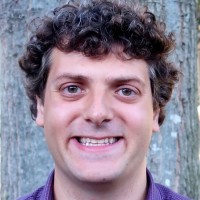
Michael Schultz, Senior Research Scientist at the Evans School of Public Policy & Governance, University of Washington
Parrington Hall Room 360
02/06/2026
12:30-1:30 PM PT
360 Parrington Hall
Co-Sponsor(s):
Evans School of Public Policy & Governance
A person’s work life is a major feature of the middle of the life course. A sociological approach focuses on how wages and other job rewards are tied to workers obtaining discrete positions. Consequently, the movement of workers between jobs and the work contexts of those jobs are primary explanations for inequality over the life course. The large number of possible transitions between jobs presents theoretical and methodological challenges. In this talk, I draw on several of my recent and ongoing research projects that use the 500 Census occupations to identify structural positions in the labor market and analyze occupational and wage mobility over the life course. Occupations are a meso-level unit of analysis that facilitates studying institutional job ladders, career continuity/discontinuity across job transitions, and changes in the availability and access to jobs associated with opportunity.
Michael Schultz is a Senior Research Scientist at the University of Washington’s Evans School of Public Policy & Governance. Schultz is a quantitative sociologist and social demographer who studies economic mobility, social policy, and workers’ careers. He uses a structural inequality approach that focuses on how institutions, like education systems, job ladders, and welfare state programs shape worker mobility by race, gender, and class. Schultz specializes in telling stories with data to provide insight into how workers and households navigate opportunities and constraints to advance their careers and gain economic security. Schultz is the PI on an NSF grant studying the job ladders in the STEM Skilled Technical Workforce and on a Strada Foundation grant investigating the occupational and wage outcomes of WA postsecondary school leavers. To date, his research is published in American Sociological Review, the Russell Sage Foundation Journal for the Social Sciences, Social Science Research, and Equitable Growth’s working paper series.