Population Research Discovery Seminars
Infrastructures of Resettlement: How Bureaucratic Legacies Shaped Racial Disparities in Post-Cold War Refugee Selection
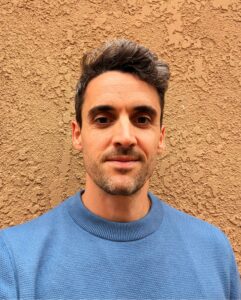
Jake Watson, Assistant Professor of Sociology, University of California San Diego
Parrington Hall Room 360
03/13/2026
12:30-1:30 PM PT
360 Parrington Hall
Co-Sponsor(s):
This paper draws on migration infrastructure perspectives to theorize how states select refugees. After the Cold War, the United States shifted its refugee admissions program from a focus on anticommunism toward more humanitarian criteria, marked by greater need-based selection and distributional equity – including explicit efforts to increase African admissions. Yet the 1990s saw the US resettle roughly 300,000 Europeans and just 40,000 Africans despite comparably large displacement crises in Yugoslavia and the Horn of Africa. Why? While scholars explain such disparities through explicit racial preferences or geopolitical interests, I show that inherited processing infrastructure shaped which humanitarian claims could be acted upon at scale. Decades of racist migration control and Cold War foreign policy had built networks of embassies, processing centers, and NGOs that could be rapidly deployed for Yugoslav displacement. African admissions, by contrast, required building capacity from scratch in an era of diminished support for refugee resettlement. Rather than viewing bureaucratic infrastructure as simply facilitating policy preferences, I show how the machinery of refugee resettlement shapes who moves quickly and at scale, and who moves slowly or not at all. This approach reveals how racialized disparities become embedded in migration governance itself, persisting even as stated priorities shift.
Jake Watson is an Assistant Professor of Sociology at UC San Diego. His research examines how bureaucratic systems and organizational processes shape the governance and mobility of refugees. He is completing his first book, The Resettlement Machine: How America Selects Refugees in an Age of Migration Control, under contract with UC Press. Based on fieldwork in Uganda and the United States and interviews with government officials, practitioners, and refugees, the book traces how politics becomes embedded in processing infrastructures to create systematic inequalities in refugees’ access to resettlement and protection. Among other forums, Jake’s research has appeared in American Sociological Review, European Journal of Sociology, Social Problems, and Ethnic and Racial Studies. He completed a PhD at Boston University, and before that worked as a psychosocial case worker for a UN Refugee Agency affiliate office in South Africa.