School-Based Support for Children’s Mental Health: Evidence from North Carolina – Sarah Komisarow
Posted: 2026-01-15 14:16:26 (CSDE Seminar Series)
When: Friday, January 23 at 12:30 pm
Where: Parrington Hall Room 360 and on Zoom
One-on-One Meetings: Follow this link
We are looking forward to hosting Sarah Komisarow from the Sanford School of Public Policy at Duke University on Friday, January 23 in Parrington Hall 360 and on Zoom. This seminar is co-sponsored by the Population Health Initiative.
In this paper Komisarow estimates the impact of specialized instructional support personnel—school nurses and social workers—on student outcomes using quasi-experimental variation from North Carolina’s Child and Family Support Teams (CFST) program. The CFST program created two sources of natural variation: directly treated schools received substantial state-funded staffing increases in the form of highly trained two-person teams composed of a school nurse and a school social worker. At the same time, other schools in the same districts experienced more modest staffing increases indirectly through reallocations of existing personnel and district-led compensatory equalization. Using event-study and difference-in-differences designs, Komisarow shows that expanded access to support personnel reduced student absences and chronic absenteeism. In directly treated schools, annual absences decreased by 0.4 days (6%) and chronic absenteeism declined by 0.9 percentage points (12%) among high-risk students. In indirectly treated schools, absences fell by 0.2 days annually (3%) among all students, though effects on chronic absenteeism were not statistically significant. Thus, while large, specialized staffing increases generated substantial improvements for the highest-risk students, smaller and less specialized increases produced modest but broader benefits across all students. These findings demonstrate that school support staff play a critical role in addressing barriers to student learning.
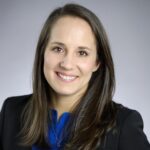
Sarah Komisarow is an Assistant Professor of Public Policy and Economics in the Sanford School of Public Policy, a Faculty Affiliate of the Center for Child & Family Policy, and a Faculty Scholar at the Duke University Population Research Institute. She is an applied microeconomist with research interests in the economics of education and K-12 education policy. She graduated from Duke University with a B.A. in Public Policy Studies in 2008 and from the University of Chicago with a M.A. and Ph.D. in Economics in 2012 and 2016, respectively. Her personal website can be accessed here: https://sites.google.com/site/sarahkomisarow/home