Population Research Discovery Seminars
The Promises and Pitfalls of Social Scientific Instruction in U.S. Medical Schools
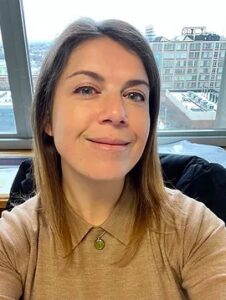
Lauren Olsen, Assistant Professor of College of Liberal Arts, Temple University
Parrington Hall Room 360
05/22/2026
12:30-1:30 PM PT
360 Parrington Hall
Co-Sponsor(s):
Department of Bioethics and Humanities
Medical schools have increasingly incorporated the humanities and social sciences into their teaching, seeking to make future physicians more empathetic and more concerned with equity. In practice, however, these good intentions have not translated into critical consciousness. Humanities and social sciences education has often not only failed to deliver on its promise but even entrenched the inequalities that the medical profession set out to address.
Lauren D. Olsen examines how U.S. medical school faculty conceived, designed, and implemented their vision of education, tracing the failures of curricular reform. She argues that the way medical students encounter humanities and social sciences material in practice has served to reinforce the status quo by teaching them to individualize systemic problems. Students learn to avoid advocacy, critique, and attention to structural inequalities—while also gathering that it will be up to them to find coping strategies for problems from burnout to systemic racism. Olsen pinpoints the limitations of how clinical faculty understand the humanities and social sciences, arguing that in structuring and teaching courses, they assumed, reinforced, and glorified a white, elite model of the medical profession. Showing how deeply intertwined professional and social identities are in medical education, Curricular Injustice has significant implications for how occupations, organizations, and institutions shape understandings of inequality.
Lauren D. Olsen joined the Department of Sociology within the College of Liberal Arts at Temple University as a faculty member in 2019. Before starting as an Assistant Professor at Temple University, Dr. Olsen completed her PhD in Sociology at the University of California San Diego (UCSD), where she also received her Master’s degree in the same field. Prior to that, she received her Bachelor’s of Arts degree in Religion from Columbia University. As a sociologist of medicine, Dr. Olsen’s award-winning research has been published in flagship journals, like the Journal of Health and Social Behavior, Social Science and Medicine, and Social Problems and has a new book out with Columbia University Press (2024), entitled Curricular Injustice: How U.S. Medical Schools Reproduce Inequalities.
Dr. Olsen’s research lies at the intersection of the sociology of medicine, knowledge, education, culture, and social inequalities. Focusing on the case of U.S. medical education, she studies how educators, physicians, and policy makers apply knowledge to improve patient care and how the context in which these actors work impacts how they utilize knowledge. Dr. Olsen addresses questions about how these actors understand the sources of health and healthcare inequalities in the U.S. patient population, how they decide what kinds of knowledge are clinically relevant, and how they reproduce forms of inequality in their educational materials and interactional processes.
Building off of the research captured in her book, Curricular Injustice: How U.S. Medical Schools Reproduce Inequalities, Dr. Olsen is currently engaged in research on premedical students’ experiences and expectations along their career path with a team of Temple University undergraduates, medical students’ and educators’ conceptualizations and engagements with “service learning” with physicians and social scientists at Lewis Katz School of Medicine, medical students plans to serve primarily underserved populations with colleague Laura Orrico, and medical school leaders’ institutional statements about national and local policies affecting their patients, students, and communities with a Temple University undergraduate.