Rao Interviewed by Visokay on his New Textbook Mathematical Demography: Theory and Modeling
Posted: 2026-09-02 12:50:44 ()
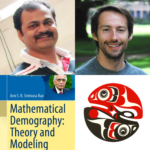
CSDE External Affiliate Arni Rao (Medical College of Georgia) recently released a new textbook titled, Mathematical Demography: Theory and Modeling. This text is uniquely designed to provide a clear and rigorous introduction to both mathematical and stochastic modeling and theory of demography with applications through a unified approach. Recently, CSDE External Affiliate/Alum Adam Visokay (UC Berkeley) interviewed Dr. Rao on his new textbook so that he could explain why students and researchers in demography need this book. Dr. Rao was also featured in Augusta University’s JagWire discussing his new textbook. To read the full interview between Dr. Rao and Dr. Visokay, click the link below.
1.What makes this the right moment for a new, comprehensive textbook on Mathematical Demography?
Mathematical population biology and mathematical demography has undergone a remarkable transformation in recent decades. While the classical foundations laid by scholars such as Lotka and others remain essential, today’s demographic challenges are increasingly complex and data-intensive. We now have access to unprecedented quantities of demographic, epidemiological, environmental, and social data, alongside powerful computational tools and artificial intelligence methods.
One unique feature of this textbook is that it provides a strong foundation in both mathematical modeling and stochastic process modeling. Most existing textbooks tend to emphasize either deterministic demographic methods or applied demographic techniques, but very few integrate rigorous mathematical demography with stochastic population processes in a comprehensive and accessible manner. I believe that understanding both perspectives is essential for modern demographic research, particularly when dealing with uncertainty, variability, and real-world population dynamics.
My goal was to provide a comprehensive resource that bridges theory and application, allowing students and researchers to understand not only how demographic measures are computed, but also the mathematical and stochastic principles underlying population dynamics. This combination of classical demographic theory, modern mathematical methods, and stochastic modeling makes the present moment particularly appropriate for a new textbook in the field.
2. Who is the ideal reader for this book, and what background should they bring to it?
The book is intended for advanced undergraduate students, graduate students, researchers, and professionals in demography, population studies, public health, epidemiology, statistics, economics, sociology, actuarial science, and related fields.
I have tried to make the presentation as self-contained as possible. Many concepts are introduced from first principles, and numerous examples are included to help readers build intuition alongside mathematical rigor.
I also hope that the text will serve as a reference for established researchers who may wish to deepen their understanding of demographic theory or explore connections between classical demographic models and newer analytical approaches.
3. Mathematical Demography covers a lot of ground across many disciplines. How did you decide what to include in this textbook, and what to leave out?
My guiding principle was to focus on concepts that have enduring theoretical importance and broad applicability. The book emphasizes population dynamics, life table methods, stable and stationary populations, reproduction and growth models, matrix population models, population projections, and related mathematical frameworks.
My approach to writing the book was influenced not only by my research in demography but also by more than two decades of teaching to students at various levels. Over the past 20+ years, I have taught courses in ordinary differential equations, partial differential equations, real analysis, complex analysis, mathematical biology, stochastic processes, and related subjects. This broad teaching experience helped me identify and integrate mathematical ideas from different areas into a unified treatment of demographic phenomena. As a result, the book brings together concepts and methods that are often presented separately in the literature.
At the same time, I wanted the textbook to serve not only as a presentation of classical demographic theory but also as a gateway to important modern developments. A special feature of the textbook is its comprehensive treatment of recent advances in the theory of stationary populations, an area in which I have been actively involved for many years. In particular, the book summarizes newer developments in stationary population models, including recently proposed measures related to net reproduction rates and new criteria for assessing whether a population has achieved stationary status during a given year or period. These developments extend the classical framework and provide researchers with additional tools for understanding population stability, renewal, and aging processes.
I also sought to highlight connections between classical demographic theory and contemporary applications. Topics requiring highly specialized treatment or extensive domain-specific background were generally left to the specialized literature. My hope is that readers will leave the book with a strong conceptual foundation in demographic theory while also gaining exposure to emerging ideas that continue to shape the field of mathematical demography.
4. If you had to pick one, which technique discussed in the book do you believe is the most underutilized or underappreciated in today’s applied demographic research?
If I had to choose one, I would point to the theory of stationary populations and the mathematical relationships that emerge from stationary and near-stationary population models.
Many researchers view stationary populations primarily as idealized theoretical constructs. However, these models provide profound insights into age structure, longevity, population renewal, and the relationships between life lived and life remaining. They often yield elegant results that are difficult to see in more complicated settings.
Throughout my own research, I have found that stationary population theory continues to reveal useful principles that can be extended to broader demographic contexts. In an era dominated by large datasets and increasingly complex computational models, there is still tremendous value in simple mathematical structures that illuminate fundamental demographic mechanisms. I believe these ideas deserve wider recognition and application in contemporary demographic research.
Closing Remark:
I am grateful for the opportunity to discuss the book with the CSDE community. Mathematical demography is a field with a rich history and an exciting future, and I hope this textbook helps train the next generation of scholars to advance both the theory and practice of population science.