Population Research Discovery Seminars
Enduring Illegality: Time and the State of Waiting in Undocumented Middle Life
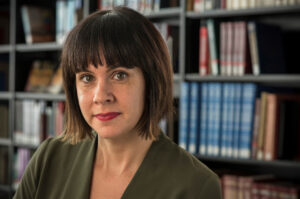
Angela Garcia, Associate Professor of Crown Family School of Social Work, Policy and Practice, The University of Chicago
Parrington Hall Room 360
To Join By Zoom: Register HERE
Follow this link to sign up for a 1:1 meeting with Dr. Garcia during their visit on May 15th
05/15/2026
12:30-1:30 PM PT
360 Parrington Hall
Co-Sponsor(s):
Evans School of Public Policy & Governance
How does the state govern immigrant lives not only through law, but through time? This book talk centers “illegality” as a temporal mechanism of U.S. migration governance: by withholding broad pathways to legal status, the state sustains prolonged legal uncertainty, blocked mobility, and restricted cross-border movement that structure the life course. Drawing on three waves of longitudinal interviews with long-settled undocumented Mexican immigrants in Chicago, the talk traces how those who migrated as young adults enter middle life in a condition of legal and temporal suspension that coincides with peak responsibility for others—raising children in the United States while supporting aging parents from afar. Examining the undocumented “sandwich generation,” the talk shows how family caregiving is reorganized through prolonged legal uncertainty: strain concentrates when children are young, responsibilities shift onto adolescents as they age, and care for parents abroad becomes coordinated long-distance support marked by the emotional costs of absence, even as immigrants’ own later-life security remains uncertain. By centering time as a tool of migration governance, the talk offers a structural account of how immigration policy produces inequality that outlasts any single reform or administration, embedding waiting, deferral, and constrained mobility across the arc of adulthood.
Angela S. García is Associate Professor at the University of Chicago’s Crown Family School of Social Work, Policy, and Practice, with affiliations in Sociology and Comparative Human Development. Her research examines international immigration, law, and membership, focusing on migration governance and the shaping of immigrants’ long-term life chances. Her first book, Legal Passing: Navigating Undocumented Life and Local Immigration Law (University of California Press 2019), compares how restrictive and accommodating local immigration contexts reorganize undocumented life and drive strategies of “passing” within uneven legal landscapes. Her second book, Enduring Illegality: Time and the State of Waiting in Undocumented Middle Life (University of California Press 2026), shows how the state uses time as a mechanism of immigration control, with prolonged legal uncertainty shaping the life course into middle age through deferred futures and constrained caregiving, work, and health trajectories. García currently studies documentation and municipal ID programs across cities in the Americas and Europe, focusing on urban inclusion, administrative justice, and policy diffusion. She earned a PhD in Sociology and an MA in Latin American Studies from the University of California, San Diego, where she was affiliated with the Center for Comparative Immigration Studies and the Mexican Migration Field Research Program.