The Standard Application Process (SAP) is a common application for applying for access to confidential data from across U.S. federal statistical agencies and units. The SAP is an important part of federal efforts to promote the use of data for evidence-building purposes and is governed by policies established by the Interagency Council on Statistical Policy. Many of the confidential data from SAP participating agencies are only accessible through a Federal Statistical Research Data Center like the Northwest Federal Statistical Research Data Center (NWFSRDC) on the UW Seattle campus.
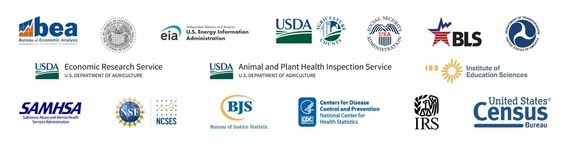
SAP participating agencies:
The NWFSRDC invites you to join the SAP Project Management Office’s upcoming webinar, The Standard Application Process (SAP): How it Works and What to Expect, on Wednesday, July 24, 2024, from 11:00 PM to 12:00 AM PT for new and exploratory SAP users who would like to learn more about the SAP. There will also be an opportunity to ask questions. Presentation topics include:
- An overview of the SAP
- Benefits of the SAP
- Searching and applying for data
- What happens after applying
Please click here to register for the event.
We also encourage you to visit our website or contact us at nwfsrdc@uw.edu to learn more about accessing non-public federal microdata through the NWFSRDC.
CSDE Affiliate Min Hee Kim (Institute for Health Policy Studies, UCSF) published an article in the American Journal of Epidemiology, titled “Mediating pathways between neighborhood disadvantage and cardiovascular risk: Quasi-experimental evidence from a Danish refugee dispersal policy.” While the neighborhood disadvantage is associated with increased cardiovascular disease risk, it is unclear which mechanistic pathways mediate this association, Leveraging a natural experiment in which refugees to Denmark were quasi-randomly assigned to neighborhoods across the country during 1986-1998 and using 30 years of follow-up data from population and health registers, this study applied counterfactual mediation analysis, showing cumulative income (but not unstable employment or poor mental health) mediated 6%-28% of the disadvantage effect on these outcomes. As the world contends with multiple global refugee crises, this study supports the robust income support for refugees settled in materially disadvantaged neighborhoods in protecting CVD health.
CSDE Affiliate Annie T. Chen (Biomedical Informatics and Medical Education) co-authored a new article in the Journal of Pain, entitled “Mobile App Use among Persons with Fibromyalgia: A Cross-Sectional Survey“. Persons with fibromyalgia experience a diverse set of symptoms. Recommendations for management generally focus on multidisciplinary approaches involving multiple modalities. Mobile apps can be an essential component for self-management, yet little is known about how persons with fibromyalgia use mobile apps for health-related purposes. A cross-sectional survey (N=663) was conducted to understand the real-world use of apps among persons with fibromyalgia.
CSDE Affiliate Dan Goldhaber’s research was included in a recent NPR Morning Edition, “Congress poured billions of dollars into schools. Did it help students learn?” and his interview was featured during the radio segment as well. During the pandemic, $190 million in federal emergency funding went towards U.S. schools, but what was the money used towards and how did it help? The hosts of the show use Dr. Goldhaber’s study and one other study to discuss how this funding truly impacted the school districts. Dr. Goldhaber’s study includes findings on how this funding showed improvement in test scores, as well as what else is needed regarding funding to see improvement in academic performance. Dr. Goldhaber and his research is also featured in The New York Times, Schools Got a Record $190 Billion in Pandemic Aid. Did It Work?, The Washington Post, To fix post-pandemic learning loss, we need an education moonshot, and more.
CSDE Affiliate Daniel Promislow, Jean Mayer USDA Human Nutrition Research Center on Aging at Tufts University and Co-Director of the Dog Aging Project, was recently featured in the New York Times article, “How Science Went to the Dogs (and Cats).” The article discusses how research on canine cognition and behavior has increased over the last couple of decades and includes different pet projects from various universities and research centers across the country. Dr. Promislow’s research with the Dog Aging Project includes information on how dogs with active lifestyles are less at risk to develop “doggy dementia”, how homes with multiple pets can be good for canine health, and asks the question “What are the biological, environmental and lifestyle factors that influence healthy aging in dogs?”
The National Center for Education Research (NCER) is hosting virtual office hours for applicants interested in applying to the Education Research Grants (84.305A), Using Longitudinal Data to Support State Education Policymaking (84.305S), and Transformative Research in the Education Sciences Grants (84.305T) programs. To see the schedule of office hours and to request additional information, visit the Virtual Office Hours page.
During these sessions, IES program officers will answer questions posed by participants on the call and discuss the grant competitions, including topics such as—
- Eligibility to apply
- Research ideas and proposals
- Requirements and recommendations for different project types
- How to identify the right funding opportunity, topic area, or project type
- Working with IES program officers during the application process
The virtual office hours are open to the public and do not require pre-registration. Participants can ask questions and learn from the general discussion. Participants can attend as many as they would like to and come and go whenever they’d like.
The Institute of Education Sciences, a part of the U.S. Department of Education, is the nation’s leading source for rigorous, independent education research, evaluation, statistics, and assessment.