CSDE’s seminar series closed out the autumn quarter with an excellent poster session, featuring CSDE Trainees and students Hugo Aguas (PhD student, Sociology), Breon Haskett (PhD student, Sociology), Julie Kim (PhD student, Health Metrics), and Bocheng Zhang (PhD student, Economics)! Julie Kim took home the prize with her work on gender parity in academia, titled “Global Improvements in the Representation of Women in Science Have Stalled”. CSDE extends a special thank you to Liz Nova, Jill Fulmore and Maddie Farris for organizing the event and the CSDE Faculty Affiliate Feedback Panel: Zack Almquist, Rawan Arar, and Anjum Hajat. CSDE wishes everyone a happy holiday and appreciates all who helped make fall’s seminar series a success!
Read the full story to see posters from the event!
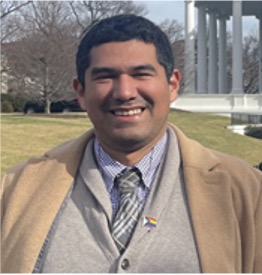 Hugo Aguas (PhD student, Sociology): (poster link) Housing Precariousness Relationships to Household Composition Amongst Hispanic Renters 2020-2023

Breon Haskett (PhD student, Sociology): (poster link) Nowhere Bound: Industrial Pull Factors in the US
Julie Kim (PhD student, Health Metrics): (poster link) Global Improvements in the Representation of Women in Science Have Stalled

Bocheng Zhang (PhD student, Economics): (poster link) Language Assimilation as a Determinant of School Attendance for Immigrant Children
CSDE Affiliate Dr. Himanshu Grover (Urban Design & Planning) authored research in Humanities & Social Science Communication, titled “Public risk perception of covid-19 transmission and support for compact development“. In the last few decades, there has been a definitive shift in public support for compact development in urban settings – characterized by high densities, more multifamily residential use, and effective public transit. The allure of compact development is because, along with sustainability benefits, it offers multiple lifestyle benefits, such as more significant opportunities for socialization and easy access to amenities. However, given the recent pandemic, there may be growing concern about how future public support for compact development may change. This research assesses the relationship between perceived concern for COVID-19 transmission and public support for compact development in urban settings. The overall results suggest a growing negative association between concern about Covid-19 infection and compact development in urban settings, although there is also heterogeneity in patterns across income and age among urban residents.
This study analyzes data from a national online survey (n = 1100) conducted in the United States toward the end of the COVID-19 pandemic (April 2022). The results from SEM analysis suggest that people more concerned about COVID-19 transmission are less supportive of compact development policies. People from areas with higher density and more COVID-19 cases are likely to have greater concern for COVID-19 transmission, which may decrease support for compact development in these areas (mediated relationship). Individuals who rely on news, online media, friends or family for COVID-19 information and single-family residents are also less likely to support compact development. In contrast, while older adults are likely to have higher concern for COVID-19 transmission, they are likely to support compact development. Higher-income households are less likely to be concerned about COVID-19 transmission but are more supportive of compact development. These findings suggest that the perceived threat of disease transmission will likely result in decreased public support for compact development. To ensure continued public support, urban policymakers must allay public fear of virus transmission in compact built environments by incorporating public health measures for controlling virus transmission in compact urban environments.
CSDE Affiliate Dr. Chiyoung Lee (Nursing) co-authored a study in the Journal of the American Psychiatric Nurses Association, entitled “Identification of Relationships Among Resilience Factors Using Network Analysis: A Pilot Study“. Although college life can be fulfilling, it can be stressful, particularly for health professional students. In addition, they may have had Adverse Childhood Experience (ACE) that increases their sensitivity to academic stress. Yet, students need to overcome challenges to become successful professionals. This study sought to identify the relationships among factors associated with resilience using network analysis. The network analysis revealed positive associations between (1) mental health and sense of coherence (SOC); (2) mental health and resources; (3) mental health and social support; (4) SOC and reappraisal of emotional regulation; (5) resources and reappraisal of emotion regulation; and (6) resources and social support. In addition, SOC and academic stress were negatively associated. Furthermore, the short variant of 5-HTTLPR/rs25531 was associated with stronger suppression of emotion regulation and fewer resources compared with the long variant. Lee and colleagues conclude that Resilience may be influenced by biopychosocial factors, notably SOC and 5-HTTLPR/rs25531. However, they also recommend that further longitudinal research is needed with a larger sample size to better understand how these and other factors may affect resilience.
IPUMs is excited to announce the release of the 2022 1-year data from the American Community Survey (ACS) through IPUMS USA and IPUMS NHGIS. There are also new data from IPUMS MTUS, IPUMS CPS, and IPUMS USA. Links to all new data are in the full story!
IPUMS NHGIS
NHGIS has added the 2022 1-Year ACS Summary File, including over 1,400 data tables for geographic areas with 65,000 or more residents.
IPUMS TIME USE
The 2022 ATUS is now available via MTUS as are data from seven countries from the 1960s. For all revisions to IPUMS MTUS, see the revision history.
IPUMS CPS
October CPS basic monthly data are now available.
IPUMS USA
New data available on IPUMS USA include:
CSDE Affiliates Dr. Engi Attia (Pulmonary, Critical Care and Sleep Medicine) and Dr. Joseph Delaney (Epidemiology) released their research in JAIDS, “Venous thromboembolism among people with HIV: Design, implementation, and findings of a centralized adjudication system in clinical care sites across the United States“. People with HIV (PWH) are at increased risk for venous thromboembolism (VTE). The authors conducted this study to characterize VTE including provoking factors among PWH in the current treatment era. Their robust adjudication process demonstrated the benefits of multiple ascertainment approaches followed by adjudication. Provoked VTEs were more common than unprovoked events. Non-traditional and modifiable potential predisposing factors such as viremia and smoking were common.
Authors included PWH with VTE between 2010-2020 at six sites in the CFAR Network of Integrated Clinical Systems (CNICS) cohort. They ascertained for possible VTE using diagnosis, VTE-related imaging, and VTE-related procedure codes, followed by centralized adjudication of primary data by expert physician reviewers. They evaluated sensitivity and positive predictive value of VTE ascertainment approaches. VTEs were classified by type and anatomic location. Reviewers identified provoking factors such as hospitalizations, infections, and other potential predisposing factors such as smoking.
They identified 557 PWH with adjudicated VTE: 239 (43%) had pulmonary embolism (PE) with or without deep venous thrombosis (DVT), and 318 (57%) had DVT alone. Ascertainment with clinical diagnoses alone missed 6% of VTEs identified with multiple ascertainment approaches. DVTs not associated with intravenous lines were most often in the proximal lower extremities. Among PWH with VTE, common provoking factors included recent hospitalization (n=134, 42%), infection (n=133, 42%), and immobilization/bed rest (n=78, 25%). Only 57 (10%) PWH had no provoking factor identified. Smoking (46%), HIV viremia (27%) and injection drug use (22%) were also common.
They conducted a robust adjudication process that demonstrated the benefits of multiple ascertainment approaches followed by adjudication. Provoked VTEs were more common than unprovoked events. Non-traditional and modifiable potential predisposing factors such as viremia and smoking were common.